
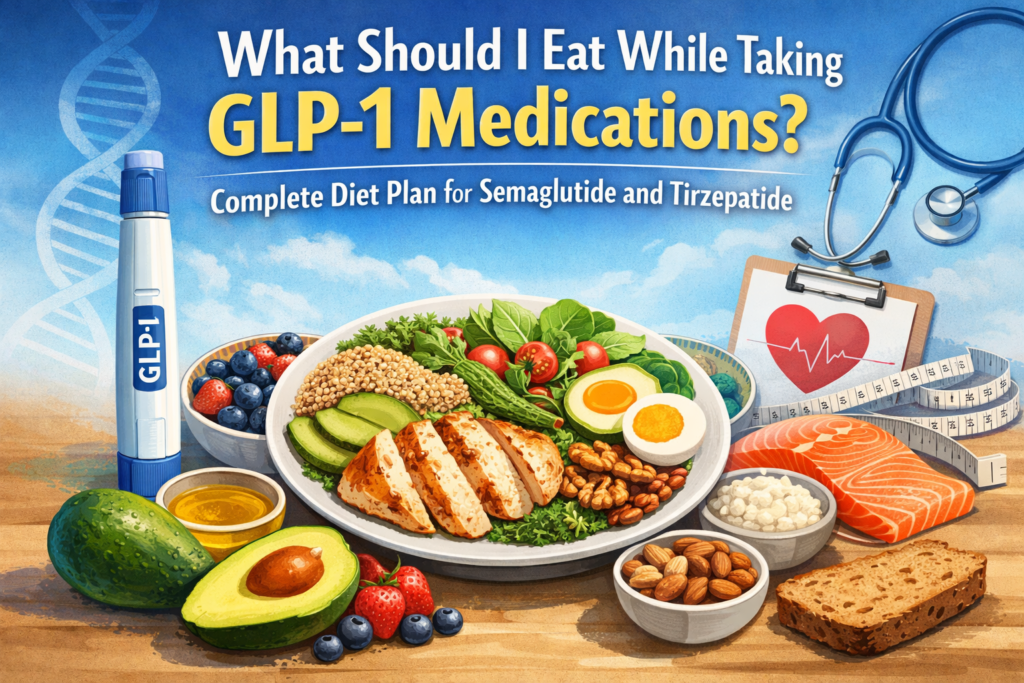
Quick Answer:
While taking GLP-1 medications, prioritize:
- High-protein foods (80-100g daily)
- Eating small frequent meals (5-6 times daily)
- Nutrient-dense whole foods
- Avoid greasy, fried, or high-sugar foods that worsen nausea
Most people do best with 1,200-1,800 calories daily, though individual needs vary. Proper nutrition maximizes weight loss, minimizes side effects, and prevents muscle loss.
SkinnyRx offers competitive pricing and a 24/7 support to help you through your weight loss journey!
If you’ve started or are considering GLP-1 medications like Wegovy, Ozempic, Mounjaro, or Zepbound, you’ve probably noticed something dramatic: food just doesn’t appeal to you the way it used to.
Your appetite is suppressed. You feel full after just a few bites. Foods you once craved now seem unappealing or even nauseating.
This raises an important question: What SHOULD you eat when you’re barely hungry?
The answer matters more than you might think. Eating too little can cause muscle loss, hair thinning, fatigue, and nutritional deficiencies. Eating the wrong foods can trigger severe nausea, digestive issues, and slower weight loss.
This guide gives you a complete, science-based diet plan optimized for GLP-1 medications, helping you maximize results while feeling your best.
This guide is for adults using (or are planning to use) prescription GLP-1 medications such as semaglutide (Ozempic, Wegovy) or tirzepatide (Mounjaro, Zepbound) for weight loss or diabetes management.
In This Guide:
- Why Nutrition Matters More Than Ever on GLP-1s
- The 3 Biggest Nutrition Mistakes on GLP-1 Medications (And How to Avoid Them)
- Your Daily Macros while taking GLP-1: Protein, Carbs, and Fats
- The Best Foods to Eat on GLP-1 Medications
- Foods to Avoid or Limit while on GLP-1
- Sample Meal Plans for Different Calorie Levels
- Eating Out and Social Situations when taking GLP-1
- Supplements You Should Consider while on GLP-1s
- Common Questions About Eating on GLP-1s
- Key Takeaways
- Your Next Steps
- Continue Learning
- Final Thoughts
Why Nutrition Matters More Than Ever on GLP-1s
GLP-1 medications fundamentally change how your body responds to food:
- You’re eating significantly fewer calories (often 30-50% less than before)
- Your stomach empties more slowly
- Your appetite signals are dramatically reduced
- You may experience food aversions or nausea
This creates a paradox: You need optimal nutrition to support weight loss and maintain health, but you have less appetite and capacity to eat.
What Happens If You Don’t Eat Enough (or Eat Wrong):
- Muscle loss instead of fat loss (your body breaks down muscle for energy)
- Hair thinning or hair loss (inadequate protein and nutrients)
- Extreme fatigue and weakness (insufficient calories and nutrients)
- Slowed metabolism (adaptive thermogenesis)
- Nutritional deficiencies (vitamin D, B12, iron, calcium)
- Worsened nausea and digestive issues (wrong food choices)
- Slower weight loss (inadequate protein and nutrients)
The goal is not to eat as little as possible. The goal is to eat strategically: nutrient-dense foods that maximize health, preserve muscle, and minimize side effects.
The 3 Biggest Nutrition Mistakes on GLP-1 Medications
Mistake #1: Not Eating Enough Protein
The Problem:
Many people eat only 40-60g protein daily on GLP-1s (under half of what they need).
Why It’s Bad:
Without adequate protein, your body breaks down muscle tissue for energy. You lose weight, but too much of it is muscle instead of fat.
The Solution:
- Aim for 80-100g+ protein daily minimum
- Eat protein at every meal and snack
- Prioritize high-quality lean proteins
Real-World Example:
“I was only eating about 800 calories a day and felt like I was doing great because the scale was dropping fast. But after 3 months, I noticed my arms looked skinny and weak, and I had no energy for workouts. My dietitian explained I was losing muscle. Once I started prioritizing protein (even though I wasn’t hungry), I felt so much better and my body composition improved dramatically.” – Sarah, 42
Mistake #2: Eating Too Few Calories
The Problem:
Some people eat only 600-900 calories daily because they’re simply not hungry.
Why It’s Bad:
- Slows metabolism
- Causes extreme fatigue
- Leads to nutritional deficiencies
- Increases muscle loss
- Not sustainable long-term
The Solution:
- Most people need 1,200-1,800 calories daily (varies by individual)
- Set meal reminders if you forget to eat
- Use calorie tracking app for first 2-3 months
- Work with dietitian if consistently eating under 1,000 calories
Mistake #3: Choosing the Wrong Foods
The Problem:
Eating high-fat, greasy, or sugary foods that trigger severe nausea and digestive issues.
Why It’s Bad:
- Worsens side effects
- Makes medication less tolerable
- Leads to nutrient-poor diet
- Slows weight loss results
The Solution:
- Stick to lean proteins, vegetables, fruits, and whole grains
- Avoid fried foods, heavy cream sauces, and high-sugar treats
- Choose foods that are gentle on digestion
Your Daily Macros: Protein, Carbs, and Fats
Let’s break down what your daily nutrition should look like:
Protein: The Most Important Macro
Daily Target: 80-100g minimum (some people benefit from 100-120g)
Why It Matters:
- Preserves lean muscle mass during weight loss
- Keeps you feeling fuller longer
- Supports skin, hair, and nail health
- Aids in recovery and healing
- Highest thermic effect (burns calories to digest)
How to Hit Your Protein Goals:
✅ Eat 25-35g protein at each main meal
✅ Include protein in every snack (15-20g)
✅ Use protein shakes when solid food is unappealing
✅ Choose lean, high-quality sources
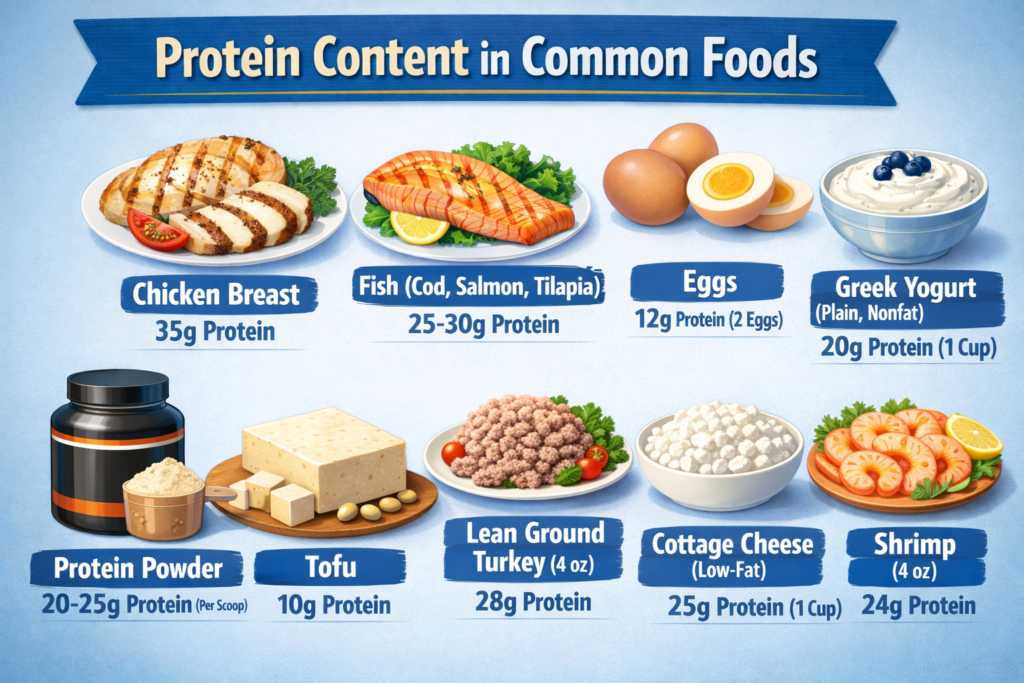
Protein Per Serving:
- 4 oz chicken breast: 35g
- 4 oz fish (cod, salmon, tilapia): 25-30g
- 1 cup Greek yogurt (plain, nonfat): 20g
- 2 eggs: 12g
- 1 scoop protein powder: 20-25g
- 4 oz lean ground turkey: 28g
- 1 cup cottage cheese (low-fat): 25g
- 4 oz shrimp: 24g
Carbohydrates: Choose Complex Over Simple
✅ Complex carbohydrates (whole grains, legumes, vegetables) are nutrient-dense, fiber-rich, and digest slowly, providing sustained energy.
❌ Simple carbohydrates (sugar, white flour) are rapidly digested, causing quick spikes in blood sugar and energy crashes
Daily Target: 100-150g (adjust based on individual needs and activity level)
Best Carb Sources:
✅ Vegetables (unlimited – mostly fiber)
✅ Fruits (1-2 servings daily)
✅ Whole grains (oatmeal, brown rice, quinoa)
✅ Sweet potatoes
✅ Legumes (beans, lentils)
Carbs to Limit:
❌ White bread, white rice
❌ Sugary cereals
❌ Pastries and baked goods
❌ Candy and high-sugar snacks
❌ Soda and juice
Why Complex Carbs Win:
- Provide sustained energy
- High in fiber (helps with constipation, a common side effect)
- Packed with vitamins and minerals
- Don’t spike blood sugar
- Easier to digest than simple sugars
Healthy Fats: Essential But Moderate
Daily Target: 40-60g
Why You Need Fats:
- Hormone production
- Vitamin absorption (A, D, E, K)
- Brain health
- Satiety
Best Fat Sources:
✅ Avocado (1/4 to 1/2 avocado daily)
✅ Nuts and seeds (small portions – 1 oz)
✅ Olive oil (1-2 tablespoons daily)
✅ Fatty fish (salmon, sardines)
✅ Eggs
Fats to Avoid:
❌ Fried foods
❌ Heavy cream sauces
❌ Excessive cheese
❌ Fatty cuts of red meat
❌ Greasy fast food
Important: High-fat foods are the #1 trigger for nausea on GLP-1s. Keep portions moderate.
The Best Foods to Eat on GLP-1 Medications
These foods are well-tolerated, nutrient-dense, and support optimal results:
Lean Proteins (Your Foundation)
| ✅ Chicken breast (grilled, baked, not fried) | ✅ Eggs (whole or egg whites) |
| ✅ Turkey breast | ✅ Greek yogurt (plain, nonfat or low-fat) |
| ✅ White fish (cod, tilapia, halibut) | ✅ Cottage cheese (low-fat) |
| ✅ Salmon (rich in omega-3s) | ✅ Tofu and tempeh (plant-based) |
| ✅ Shrimp and other shellfish | ✅ Protein powder (whey, plant-based) |
Vegetables (Eat Liberally)
| ✅ Leafy greens (spinach, kale, arugula, romaine) | ✅ Green beans |
| ✅ Broccoli and cauliflower | ✅ Asparagus |
| ✅ Zucchini and summer squash | ✅ Brussels sprouts |
| ✅ Bell peppers | ✅ Cucumbers |
| ✅ Carrots | ✅ Tomatoes |
Fruits (Portion Control)
| ✅ Berries (strawberries, blueberries, raspberries) | ✅ Bananas (especially good if feeling nauseous) |
| ✅ Apples | ✅ Melon |
| ✅ Oranges and citrus | ✅ Pears |
Complex Carbs & Whole Grains
| ✅ Oatmeal (steel-cut or old-fashioned) | ✅ Sweet potatoes |
| ✅ Quinoa | ✅ Whole grain bread (in moderation) |
| ✅ Brown rice | ✅ Lentils and beans |
Healthy Fats (Small Portions)
| ✅ Avocado (1/4 to 1/2) | ✅ Olive oil (for cooking or dressing) |
| ✅ Almonds, walnuts (1 oz or small handful) | ✅ Nut butters (1-2 tablespoons) |
| ✅ Chia seeds, flaxseeds (1-2 tablespoons) |
Digestion-Friendly Foods (For Nausea Days)
| ✅ Plain crackers (saltines, rice cakes) | ✅ Toast |
| ✅ Ginger tea | ✅ Bone broth or clear soups |
| ✅ Bananas | ✅ Peppermint tea |
| ✅ Applesauce | ✅ White rice (easier to digest than brown) |
Foods to Avoid or Limit on GLP-1 Medications
These foods commonly trigger nausea, slow digestion, or provide poor nutrition:
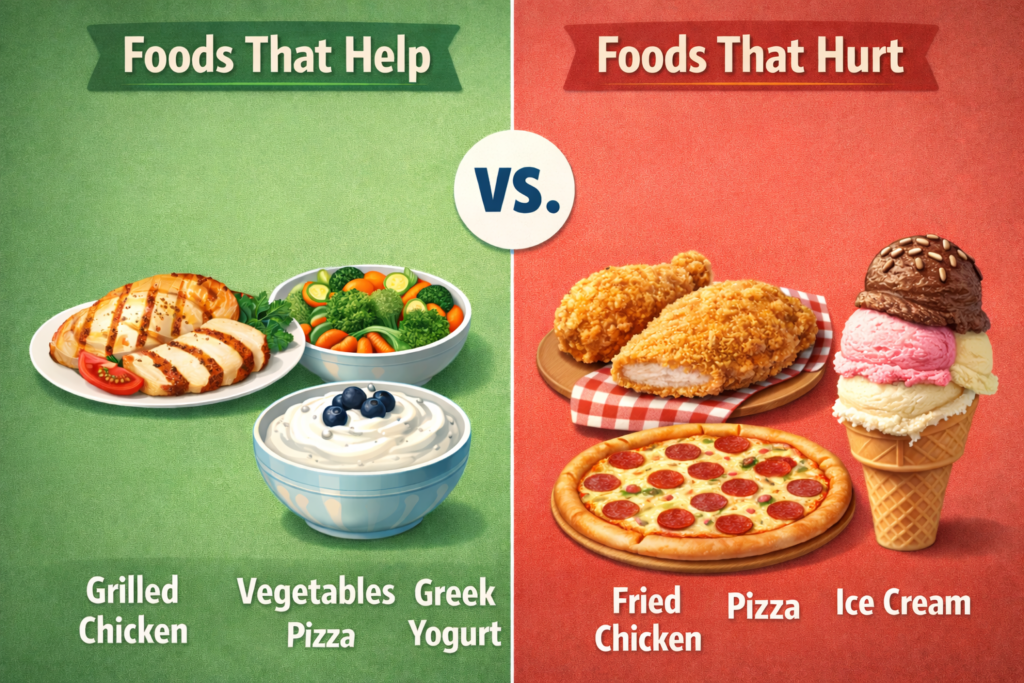
Fried and Greasy Foods (Top Nausea Trigger)
| ❌ Fried chicken, fried fish | ❌ Donuts and fried pastries |
| ❌ French fries, onion rings | ❌ Fast food burgers and sandwiches |
| ❌ Fried eggs | ❌ Anything deep-fried |
High-Fat Foods
| ❌ Fatty cuts of beef or pork | ❌ Excessive cheese |
| ❌ Heavy cream sauces (alfredo, cheese sauces) | ❌ Butter in large amounts |
| ❌ Full-fat dairy (whole milk, heavy cream) | ❌ Creamy dressings and dips |
High-Sugar Foods
| ❌ Cookies, cakes, pastries | ❌ Soda and sweetened beverages |
| ❌ Ice cream | ❌ Sugary cereals |
| ❌ Candy and chocolate | ❌ Fruit juice (high in sugar, low in fiber) |
Processed Foods
| ❌ Deli meats (high sodium, preservatives) | ❌ Packaged snack foods |
| ❌ Hot dogs and sausages | ❌ Instant noodles |
| ❌ Frozen dinners |
Difficult-to-Digest Foods
| ❌ Very spicy foods (can worsen nausea) | ❌ Cruciferous vegetables in large amounts (can cause gas) |
| ❌ Carbonated beverages (cause bloating) | ❌ Beans and legumes (start small to assess tolerance) |
Alcohol
❌ Wine, beer, liquor (empty calories, can worsen side effects, affects blood sugar)
- Best to limit or avoid alcohol while dose is increasing or if you notice more side effects.
- If you drink, do so in moderation and always with food, and discuss with your prescriber if you have diabetes or liver disease.
Note: You don’t have to eliminate these foods forever, but they should be limited, especially in the first 2-3 months and within 48 hours after your weekly injection.
Sample Meal Plans for Different Calorie Levels
Here are three sample meal plans based on common calorie needs. Adjust portions based on your individual requirements.
1,200-Calorie Meal Plan (Lower End)
Breakfast (300 calories, 30g protein):
- 2 scrambled eggs with spinach
- 1 slice whole grain toast
- 1/2 cup berries
Mid-Morning Snack (150 calories, 20g protein):
- 1 cup plain Greek yogurt
- Handful of blueberries
Lunch (350 calories, 35g protein):
- 4 oz grilled chicken breast
- Large mixed green salad with vegetables
- 1 tablespoon olive oil and vinegar dressing
Afternoon Snack (150 calories, 15g protein):
- Protein shake (20g powder + unsweetened almond milk + 1/2 banana)
Dinner (250 calories, 30g protein):
- 4 oz baked cod or tilapia
- 1 cup steamed broccoli
- 1/2 cup quinoa
Total: ~1,200 calories, 130g protein
1,500-Calorie Meal Plan (Moderate)
Breakfast (350 calories, 30g protein):
- 3-egg omelet with vegetables
- 1 slice whole grain toast
- 1/2 avocado
Mid-Morning Snack (200 calories, 20g protein):
- 1 cup cottage cheese (low-fat)
- 1/2 cup pineapple chunks
Lunch (400 calories, 35g protein):
- 5 oz grilled turkey breast
- Large salad with mixed vegetables
- 1/2 sweet potato
- 1 tablespoon olive oil dressing
Afternoon Snack (200 calories, 20g protein):
- Protein shake with berries
Dinner (350 calories, 35g protein):
- 5 oz grilled salmon
- 1 cup roasted Brussels sprouts
- 1/2 cup brown rice
Total: ~1,500 calories, 140g protein
1,800-Calorie Meal Plan (Higher End)
Breakfast (400 calories, 30g protein):
- 3-egg omelet with cheese and vegetables
- 1 cup oatmeal with berries
- 1 tablespoon almond butter
Mid-Morning Snack (250 calories, 20g protein):
- Greek yogurt parfait
- Granola
- Berries
Lunch (500 calories, 40g protein):
- 6 oz grilled chicken breast
- Large salad
- 1 cup quinoa
- 1/2 avocado
Afternoon Snack (250 calories, 20g protein):
- Protein shake
- 1 apple with 1 tablespoon almond butter
Dinner (400 calories, 35g protein):
- 5 oz lean steak or turkey
- 1.5 cups mixed roasted vegetables
- 1/2 cup brown rice or sweet potato
Total: ~1,800 calories, 145g protein
Key Principles for All Meal Plans:
✅ Eat every 3-4 hours
✅ Prioritize protein at every meal
✅ Stay hydrated (8-10 glasses water daily)
✅ Listen to your body’s satiety signals
✅ Don’t force food if genuinely not hungry, but don’t skip meals entirely
Eating Out and Social Situations
Dining out while on GLP-1s can be challenging, but these strategies help:
Restaurant Tips:
✅ Choose grilled, baked, or steamed options (never fried)
✅ Ask for dressing and sauces on the side
✅ Request vegetable substitutions instead of fries
✅ Order appetizer portions as your main course
✅ Box half your meal before you start eating
✅ Skip the bread basket
✅ Choose protein-forward dishes
Best Restaurant Choices:
- Grilled chicken or fish with vegetables
- Salads with grilled protein (dressing on side)
- Fajitas (skip the tortillas, focus on protein and vegetables)
- Sushi (sashimi, poke bowls)
- Mediterranean food (grilled proteins, hummus, Greek salad)
- Asian stir-fries (ask for less oil, brown rice)
Worst Restaurant Choices:
❌ Pasta with cream sauces
❌ Fried appetizers
❌ Burgers and fries
❌ Pizza
❌ Buffets (too many temptations)
Social Situations:
Family Dinners:
- Eat a small protein-rich snack before arriving
- Focus on protein and vegetables on your plate
- Politely decline seconds
- If questioned, simply say “I’m eating smaller portions for my health”
Parties and Events:
- Bring a healthy dish you can eat
- Position yourself away from the food table
- Focus on socializing, not eating
- If drinking alcohol, limit to 1 or 2 drinks maximum and have with food
Holidays:
- Don’t skip meals to “save room” – this backfires
- Fill your plate with protein and vegetables first
- Choose 1-2 special treats rather than trying everything
- Remember: holidays are about people, not food
Supplements You Should Consider
Because you’re eating less and may have food aversions, supplements become more important:
Highly Recommended:
✅ High-Quality Multivitamin (daily)
- Fills nutritional gaps
- Choose one with iron if you’re at risk for deficiency
- Take with food to prevent nausea
✅ Vitamin D3 (2,000-4,000 IU daily)
- Most people are deficient
- Supports immune function, bone health, mood
- Get levels checked annually
✅ Vitamin B12 (500-1,000 mcg daily or weekly injection)
- GLP-1s may affect B12 absorption
- Prevents fatigue and neurological issues
- Especially important if eating less meat
✅ Omega-3 Fatty Acids (1,000-2,000mg daily)
- Heart health
- Brain function
- Reduces inflammation
Strongly Consider:
✅ Protein Powder (20-25g per scoop)
- Convenient when solid food is unappealing
- Helps hit daily protein targets
- Whey isolate or plant-based options
✅ Fiber Supplement (if experiencing constipation)
- Psyllium husk, methylcellulose
- Start slowly to avoid gas and bloating
- Drink plenty of water
✅ Probiotic (for digestive health)
- Supports gut health during dietary changes
- May help with GI side effects
- Choose multi-strain formula
Optional (Based on Individual Needs):
- Calcium (if dairy intake is low)
- Iron (if menstruating or diagnosed with deficiency)
- Magnesium (supports muscle function, may help with constipation)
- Collagen peptides (for skin, hair, nails – 10-15g daily)
Important: Always discuss supplements with your healthcare provider, especially if you take blood thinners, diabetes medications, or have kidney or liver disease.”
Common Questions About Eating on GLP-1 Medications
Q: What if I’m just not hungry at all?
A: This is common, but you still need to eat enough to maintain health. Set phone reminders to eat every 3-4 hours. Focus on nutrient-dense foods and protein shakes. If you’re consistently eating under 1,000 calories daily, consult a dietitian or your doctor.
Q: Can I follow keto or intermittent fasting on GLP-1s?
A: You can, but be cautious:
• Keto: Ensure adequate protein (not just fat). High-fat keto may worsen nausea.
• Intermittent fasting: The medication already suppresses appetite significantly. Adding fasting may lead to eating too few calories. Most people don’t need additional restrictions.
Q: How do I know if I’m eating enough?
A: Warning signs you’re not eating enough:
- Extreme fatigue
- Dizziness or lightheadedness
- Hair thinning/loss
- Constant cold feeling
- Irritability and mood changes
- Difficulty concentrating
- Losing more than 2-3 pounds per week consistently
Track your intake for 1-2 weeks using an app like MyFitnessPal to ensure you’re hitting minimum targets.
Q: Should I eat before or after my injection?
A: It doesn’t significantly matter. Some people prefer to inject on an empty stomach (to monitor side effects better), while others prefer a light meal first. Experiment to see what works for you.
Q: Can I drink coffee on GLP-1s?
A: Yes, coffee is generally fine. However:
- Limit to 1-2 cups daily (caffeine on an empty stomach may worsen nausea)
- Avoid high-calorie coffee drinks (lattes, frappuccinos)
- Don’t use coffee as a meal replacement
- Stay hydrated with water as well
Q: What about protein shakes – are they necessary?
A: Not necessary, but highly recommended if:
- You struggle to eat solid protein
- You’re not hitting 80-100g protein daily
- You experience significant food aversions
- You need convenient, portable nutrition
Choose high-quality powder with 20-25g protein per scoop and minimal sugar.
Q: How long do I need to follow this diet?
A: These nutrition principles should continue as long as you’re on GLP-1 medications (and ideally become permanent habits). The high-protein, nutrient-dense approach supports:
- Sustained weight loss
- Muscle preservation
- Optimal health
- Easier weight maintenance when you reach your goal
Q: Can I have cheat meals?
A: You can, but be strategic:
- Avoid “cheat meals” within 48 hours of injection (when nausea is worst)
- Choose moderately indulgent, not extremely greasy or rich
- Keep portions small
- Don’t make it a regular habit
Most people find they naturally crave less indulgent food over time.
Key Takeaways
✅ Prioritize protein (80-100g daily minimum) at every meal to preserve muscle
✅ Eat 1,200-1,800 calories daily (varies by individual) – don’t go too low
✅ Choose nutrient-dense whole foods: lean proteins, vegetables, fruits, whole grains
✅ Avoid greasy, fried, high-sugar foods that trigger nausea
✅ Eat small frequent meals (5-6 times daily) instead of 3 large meals
✅ Stay hydrated with 8-10 glasses of water daily
✅ Take supplements to fill nutritional gaps (multivitamin, vitamin D, B12, omega-3)
✅ Listen to your body but don’t skip meals entirely
✅ Track your food intake for the first few months to ensure adequate nutrition
✅ Work with a registered dietitian if you struggle to maintain proper nutrition
Your Next Steps
Now that you understand optimal nutrition for GLP-1 medications, here’s how to get started:
Choose a suitable GLP-1 provider and program that suites you:
Week 1 Action Plan:
✅ Download a food tracking app (MyFitnessPal, Cronometer)
✅ Calculate your protein target (80-100g minimum)
✅ Stock your kitchen with GLP-1-friendly foods (see lists above)
✅ Purchase high-quality protein powder
✅ Buy recommended supplements
✅ Set meal reminders on your phone
✅ Plan your first week of meals using sample plans above
Week 2-4:
✅ Track everything you eat (calories and protein)
✅ Adjust portions based on hunger and results
✅ Identify trigger foods that worsen nausea
✅ Establish consistent meal timing
✅ Build your personal list of go-to meals
Long-Term:
✅ Continue tracking intermittently to ensure adequate intake
✅ Work with dietitian for personalized guidance
✅ Adjust calorie and macro targets as you lose weight
✅ Focus on building sustainable habits
✅ Consider resistance training to preserve muscle
Continue Learning:
- How Do GLP-1 Medications Work?
- GLP-1 Side Effects and How to Manage Them
- Do I Qualify for GLP-1 Medications?
- Which Is Better: Semaglutide or Tirzepatide for Weight Loss?
Final Thoughts
Nutrition is one of the most important factors determining your success on GLP-1 medications.
The medication does the heavy lifting by reducing appetite and cravings, but YOU control what you eat. Make those calories count by choosing nutrient-dense, high-protein foods that support muscle preservation, minimize side effects, and maximize results.
The first few weeks may feel challenging as you adjust to eating differently, but most people quickly find a rhythm. Within a month or two, these eating patterns become second nature.
Remember: the goal is not to eat as little as possible. The goal is to eat strategically to support your health, maintain energy, preserve muscle, and build sustainable habits for long-term success.
You’re not on a diet. You’re building a new, healthier relationship with food.
Medical Disclaimer: This article is for informational purposes only and does not constitute medical or nutritional advice. Individual nutritional needs vary based on age, activity level, medical conditions, and medications. Always consult with a qualified healthcare provider or registered dietitian before making significant dietary changes or starting new supplements. GLP-1 medications require medical supervision.
Sources: Information compiled from clinical nutrition guidelines, FDA prescribing information for semaglutide and tirzepatide, Academy of Nutrition and Dietetics recommendations, peer-reviewed research on GLP-1 medications and body composition, and real-world patient experiences (2022-2026).
Affiliate disclosure: This article contains affiliate links. If you click on a link and end up purchasing a GLP-1 program or medication, we may earn a commission at no extra cost to you. This helps us keep researching and updating honest, in-depth guides about GLP-1 options.
Last Updated: June 2026