
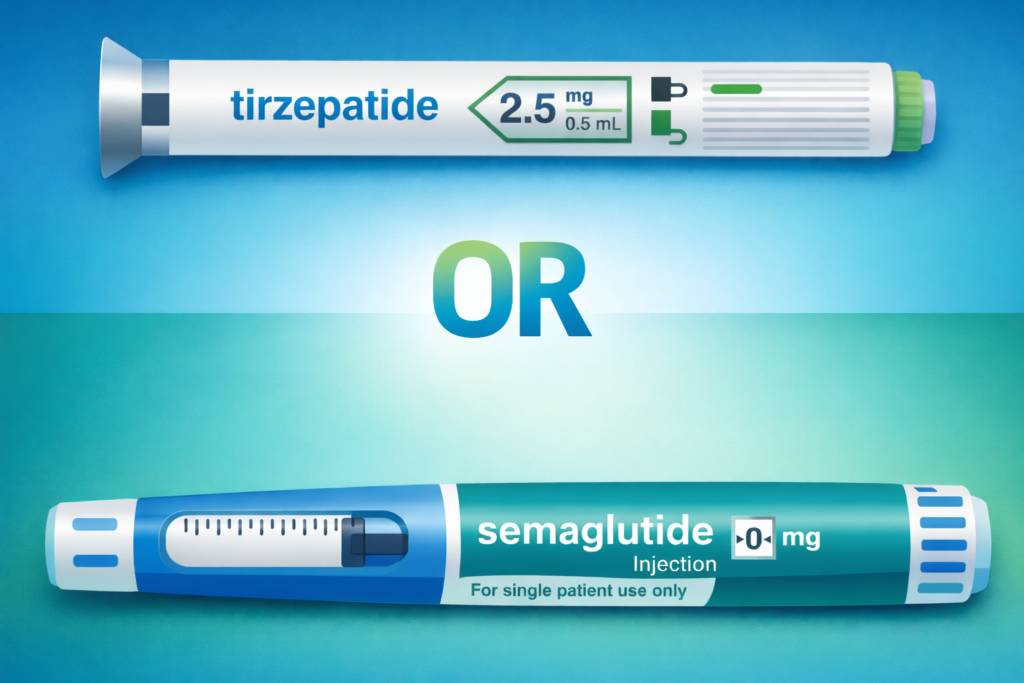
Quick Answer:
If you only want the bottom line, here it is: tirzepatide generally leads to more weight loss than semaglutide in recent clinical trials, often by about 4–6% more total body weight at higher doses. That doesn’t automatically make it the “better” choice for you, because side effects, cost, your medical history, and what you can realistically stick with matter just as much in real life.
SkinnyRx offers both oral and injectible compounded semaglutide and tirzepatide options. Consult with their physicians to decide which option is best for you!
In This Guide
- What semaglutide and tirzepatide actually are
- Brand names you’ll hear (Wegovy, Ozempic, Zepbound, Mounjaro)
- How much weight you can realistically lose
- Side‑by‑side comparison table
- Side effects and safety (including 2026 label updates)
- Real‑world cost and insurance issues
- When semaglutide might be better for you
- When tirzepatide might be better for you
- What it feels like to be on these medications
- Using Semaglutide or Tirzepatide Safely
- What Happens If You Stop?
- Key takeaways
- Your next steps
- Final thoughts
What Are Semaglutide and Tirzepatide?
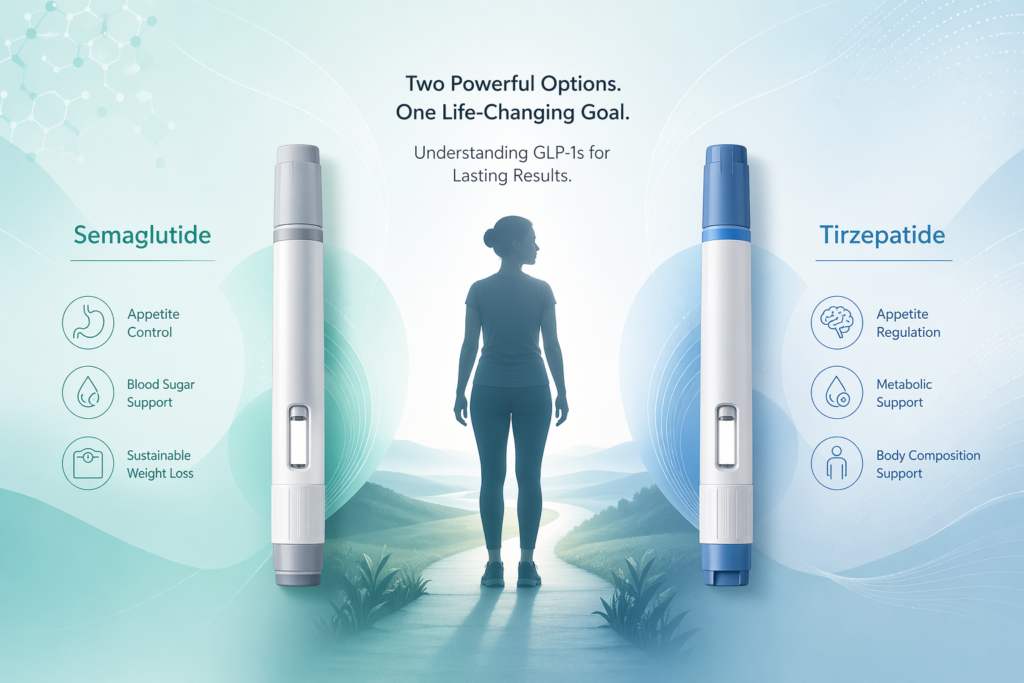
Semaglutide and tirzepatide are once‑weekly injectable medications originally developed for type 2 diabetes that also turned out to be powerful tools for long‑term weight loss. Semaglutide activates GLP‑1 receptors, while tirzepatide activates both GIP and GLP‑1 receptors, which seems to amplify appetite and weight‑loss effects in many people.
- Semaglutide: GLP‑1 receptor agonist, used at higher doses for chronic weight management (Wegovy) and at lower doses for diabetes (Ozempic).
- Tirzepatide: Dual GIP/GLP‑1 receptor agonist, used for both weight management (Zepbound) and diabetes (Mounjaro)
We will discuss how GLP-1 and GIP work in the body later!
Brand Names You’ll Hear (Wegovy, Ozempic, Zepbound, Mounjaro)
People often use brand names and generic names interchangeably, which can get confusing fast.
Semaglutide Brands
- Wegovy: Semaglutide at higher obesity‑dosing levels, specifically approved for chronic weight management.
- Ozempic: Semaglutide approved for type 2 diabetes; sometimes prescribed off‑label for weight loss in lower doses.
Tirzepatide Brands
- Zepbound: Tirzepatide formulation approved for obesity and chronic weight management.
- Mounjaro: Tirzepatide approved for type 2 diabetes and known to cause clinically meaningful weight loss as a “bonus.”
How Much Weight Can You Really Lose?
Across multiple head‑to‑head and comparative studies, tirzepatide consistently outperforms semaglutide in average weight loss at the higher doses used for obesity.
- A meta‑analysis pooling tens of thousands of patients found tirzepatide produced about 4–5 percentage points more weight loss than semaglutide overall.
- In the SURMOUNT‑5 trial of adults with obesity but no diabetes, people on tirzepatide lost about 20.2% of their body weight at 72 weeks, versus 13.7% on semaglutide.
- That’s roughly 22–23 kg vs 15 kg of weight lost on average, depending on starting weight.
In real life, your number will depend on where you start, how consistently you use the medication, your genetics, and how your lifestyle changes along the way.
Semaglutide vs Tirzepatide: 2026 Comparison Table
Side‑by‑Side Overview
| Feature | Semaglutide (e.g., Wegovy) | Tirzepatide (e.g., Zepbound) |
| Drug type | GLP‑1 receptor agonist. | Dual GIP/GLP‑1 receptor agonist. |
| Typical trial weight loss (high dose, ~72 weeks) | Around 10–15% average body‑weight loss. | Around 15–20% average body‑weight loss. |
| Dosing | Weekly injection, titrated up to 2.4 mg for weight management. | Weekly injection, titrated up to 10–15 mg for weight management. |
| Common side effects | Nausea, vomiting, diarrhea, constipation, abdominal pain, decreased appetite. | Similar GI issues, plus injection‑site reactions; some data show slightly fewer GI‑related discontinuations vs semaglutide in SURMOUNT‑5. |
| Serious risks | Rare pancreatitis, gallbladder disease, kidney injury from dehydration, thyroid C‑cell tumor warning in animals. | Similar class risks; monitoring for dosing errors and GI events in post‑marketing data. |
| Label updates (2026) | As of Jan 2026, FDA requested removal of suicidal ideation warnings from GLP‑1 labels including Wegovy. | The same request applies to Zepbound and tirzepatide products. |
| Cost & coverage | High list price; coverage varies by indication and insurer, often better known to payers because of earlier approval. | High list price; early cost‑effectiveness models suggest good value per kg lost, but coverage may be patchier. |
| Who might prefer it | Those with reliable coverage for Wegovy/Ozempic, good prior response, or more comfort with GLP‑1‑only therapy. | Those prioritizing maximal weight loss and able to access and tolerate a newer dual‑agonist. |
How Do They Work in Your Body?
Both medications work by mimicking gut hormones that communicate with your brain and digestive system after you eat. This signaling helps you feel full sooner, stay satisfied longer, and smooth out blood‑sugar swings that can drive cravings.
- Semaglutide: Boosts GLP‑1 activity, which slows stomach emptying, reduces appetite, and improves insulin secretion.
- Tirzepatide: Boosts both GIP and GLP‑1, which appears to further enhance appetite control and metabolic improvement, likely explaining the extra average weight loss in many trials.
Side Effects, Safety, and 2026 Updates
Most people experience at least some GI side effects, especially during the first weeks or after dose increases. For many, these ease with slower titration and simple food adjustments; for others, they can be intense enough to stop therapy.
- Nausea, vomiting, diarrhea, constipation, abdominal pain or cramping.
- Decreased appetite and feeling “full” after small meals, which can be helpful but also tricky for getting enough protein.
- Injection‑site reactions such as redness or tenderness, reported particularly in some tirzepatide real‑world data.
In SURMOUNT‑5, GI‑related discontinuations were actually somewhat higher in semaglutide users than in tirzepatide users, reminding us that “stronger drug” does not always mean “worse side effects.”
- Pancreatitis (sudden severe upper abdominal pain, often with vomiting).
- Gallstone formation or gallbladder disease, partly tied to rapid weight loss.
- Dehydration and kidney injury from prolonged vomiting or diarrhea if not treated quickly.
- Thyroid C‑cell tumor risk seen in rodent studies, leading to contraindications in people with certain thyroid cancers or MEN‑2 syndromes.
As of January 2026, the FDA has asked manufacturers to remove suicidal ideation/behavior warnings from GLP‑1 and related labels after reviewing available data, but still advises monitoring mood and mental health during treatment.
Check out this article to learn about Eden’s microdosing option to help reduce side effects during your weightloss journey:
Eden GLP-1 Microdosing Guide: How “Low and Slow” Titration Can Reduce Side Effects
Cost, Insurance, and Value for Money
The hard truth is that both drugs are expensive at list price, and coverage for obesity treatment still lags behind coverage for diabetes in many health systems. Some employers and insurers will cover one drug but not the other, or require that you fail lifestyle‑only programs before authorizing medication.
Cost‑effectiveness analyses suggest that, despite the high prices, both semaglutide and tirzepatide can be considered “worth it” in terms of health value, with tirzepatide often looking more cost‑effective per kilogram lost or per quality‑adjusted life year because of its greater average weight loss. But that’s from a health‑system perspective, not your monthly budget, so the best medication for you may simply be the one that your plan actually covers.
If your insurance does not cover the name brand options and you cannot afford the high cost of them out of pocket, many people have found compounded semaglutide and tirzepatide as excellent alternatives. Compounded versions offer the same active ingredients as the name brand options but at a fraction of the cost. Read the following article to find a compounded GLP-1 provider that suites you:
When Semaglutide Might Be the Better Fit
Even though tirzepatide often “wins” on weight‑loss numbers, semaglutide still makes more sense for plenty of people.
- Your insurance clearly covers Wegovy or Ozempic but not Zepbound or Mounjaro, or the out‑of‑pocket difference is huge.
- You or your clinician feel more comfortable starting with a GLP‑1‑only medication that has slightly longer obesity‑specific experience.
- You respond well at moderate semaglutide doses, with manageable side effects, and don’t feel you need the extra percentage points of weight loss.
For some people, the “simpler” option they can access and tolerate ends up beating the “stronger” option they can’t stick with.
When Tirzepatide Might Be the Better Fit
You don’t need to chase the absolute strongest drug, but it’s helpful to know where tirzepatide tends to shine.
- You have significant obesity, and your primary goal is the largest possible average weight loss with a single weekly injection.
- You also have type 2 diabetes, and your clinician wants to target blood sugar and weight together using a dual GIP/GLP‑1 agonist.
- You tried a GLP‑1 alone (including semaglutide), had some benefit but hit a plateau, and your prescriber feels a dual‑agonist is a reasonable next step.
What It Actually Feels Like to Be on These Meds
While every body is different, many people describe a surprisingly similar day‑to‑day experience on both semaglutide and tirzepatide. Food feels less urgent, portions shrink almost automatically, and trigger foods lose some of their mental grip, which can feel both freeing and strange at first.
On a good week, you might notice the scale shifting slowly, your clothes fitting differently, and your energy staying fairly steady with only mild queasiness after injections. On a tougher week often right after a dose increase you might be managing nausea, reflux, or the occasional “I overdid that one bite” moment that teaches you new limits.
Using Semaglutide or Tirzepatide Safely
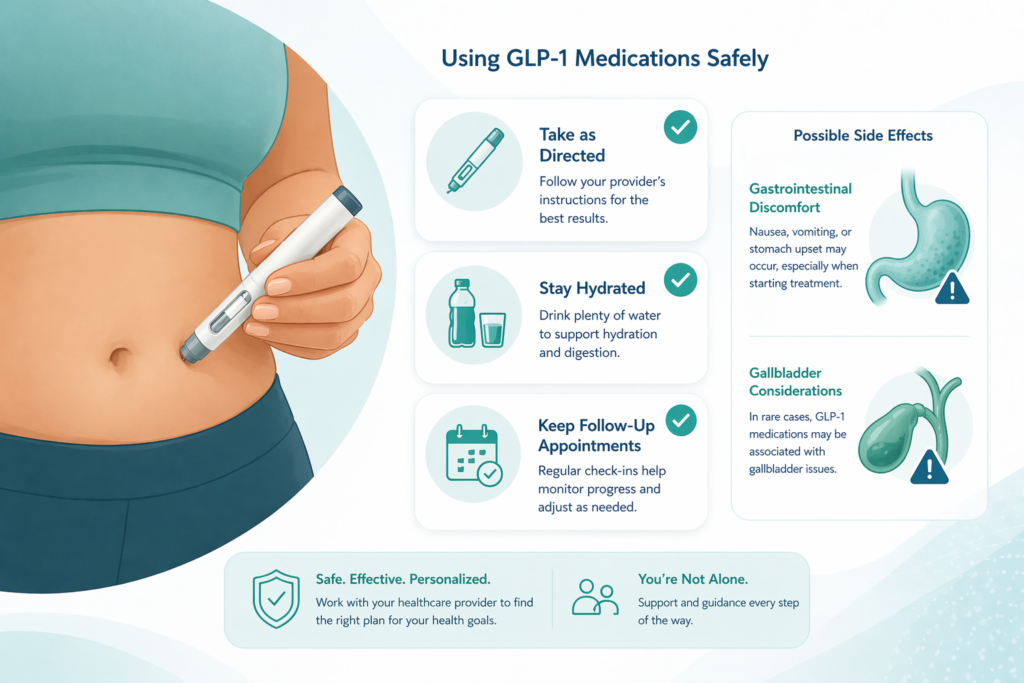
- Always follow the stepwise dose‑increase schedule rather than jumping ahead to higher doses.
- Give your body time; many side effects calm down if you stay at a given dose an extra few weeks before moving up.
- Double‑check your pen or vial instructions; regulators have documented serious problems when people mis‑read or mis-measure their doses, especially with newer products.
- Focus on protein first at meals, add high‑fiber vegetables, and sip water throughout the day to help your digestion and protect muscle.
- Eat slowly and stop before you feel stuffed; because stomach emptying is slower, overdoing it can quickly turn into nausea.
- Gentle, consistent movement like walking, light strength training, or low‑impact cardio can help preserve lean mass and support long‑term results.
What Happens If You Stop?
Most people regain at least some weight once they stop these medications, especially if they don’t have strong lifestyle habits and other support in place. That doesn’t mean the medication “failed”; it simply reflects that obesity is a chronic condition and your body tends to defend its higher weight set point.
A more realistic mindset is to treat these medications like long‑term treatments (similar to blood‑pressure meds) rather than quick fixes, with periodic check‑ins to adjust dose, reassess side effects, and decide whether staying on makes sense for you.
Key Takeaways
- Tirzepatide usually delivers more average weight loss than semaglutide at higher doses, but both are powerful tools when used correctly.
- Side effects are common especially GI issues but often manageable with slower titration, mindful eating, and close follow‑up.
- Cost and insurance coverage can be the deciding factor for many people, regardless of which drug looks “best” on a chart.
- Compounded semaglutide or tirzepatide are excellent low cost alternatives to the expensive name brand options.
- Neither medication replaces habits; long‑term results come from combining the right drug with realistic nutrition, movement, sleep, and mental‑health support.
- The best choice is the one that fits your health profile, your budget, and your life and that you can safely stick with over time.
Your Next Steps
- Make a list of your main goals: weight, blood sugar, energy, mobility, or something else.
- Check your health‑plan portal or call member services to see which obesity and diabetes medications are actually covered for you.
- Book an appointment with a clinician who is comfortable prescribing GLP‑1/GIP‑GLP‑1 medications, and bring your questions. Online providers such as SkinnyRx, DirectMeds, Enhance.MD, Eden Health, Yucca or Medvi can often book you for an online consultation within 24 hours to answer your questions, assess your situation an help provide you with the appropriate next steps.
- If you start one of these drugs, track your weight, side effects, and how your eating patterns change over at least 3–6 months.
- Build or strengthen simple, sustainable habits like walking more and prioritizing protein that will support you whether or not you stay on medication forever.
Final Thoughts
We’re living through a major shift in how medicine treats obesity, and it’s normal to feel hopeful, skeptical, and overwhelmed all at once. You don’t have to figure everything out in one visit or pick the “perfect” medication on the first try; you just need a plan that feels doable for you right now and a team that’s willing to adjust as you go.
If you take anything from this guide, let it be this: your weight is only one part of your health story, and choosing semaglutide, tirzepatide, or neither doesn’t define your worth or your ability to change.
Related Articles
- How GLP-1 Medications Work: Mechanisms, Timeline, and What to Expect [2026]
- What Do I Need to Know About GLP‑1 Weight Loss? 15 Most Asked Questions Answered
- What Should I Eat While Taking GLP-1 Medications? Complete Diet Plan for Semaglutide and Tirzepatide
Medical Disclaimer
This article is for informational and educational purposes only and is not a substitute for professional medical advice, diagnosis, or treatment. Always talk with your doctor, pharmacist, or qualified health provider about your specific medical situation, medications, and treatment options before starting, stopping, or changing any prescription.icer+1
Never ignore or delay seeking professional medical advice because of something you read online, including on this site. If you think you may be experiencing a medical emergency or severe side effect, contact your local emergency services or go to the nearest emergency department right away.sciencedirect+2
Sources
- Tirzepatide as compared with semaglutide for the treatment of obesity without diabetes (SURMOUNT‑5, NEJM, 2025).
- Comparative efficacy of tirzepatide vs semaglutide in producing weight loss (systematic reviews and meta‑analyses).
- Observational cohorts comparing semaglutide vs tirzepatide for weight loss and adverse events in real‑world settings.
- ICER evidence and cost‑effectiveness reports on semaglutide and tirzepatide for obesity, including 2025 updates.
- FDA safety communications on GLP‑1 drugs, compounded products, and label changes (including suicidal ideation warnings).
- Peer‑reviewed overviews of GLP‑1 and GIP/GLP‑1 mechanisms, dosing, and safety profiles.
Affiliate Disclaimer
Affiliate disclosure: This article may contain affiliate links. If you click on a link and end up purchasing a GLP‑1 program or medication, we may earn a commission at no extra cost to you. This helps us keep researching and updating honest guides about GLP‑1 options.
Last Updated: June 2026