
Quick Answer:
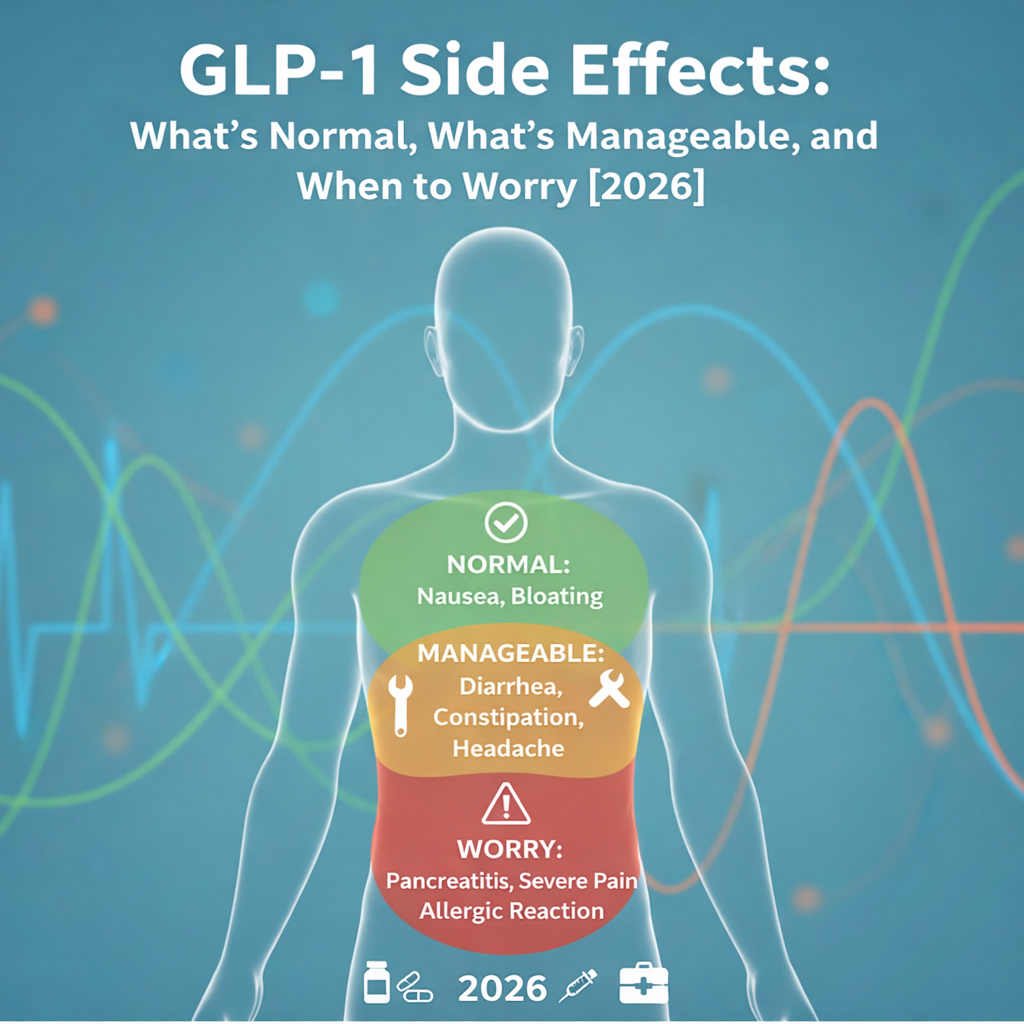
Most GLP-1 users (70-80%) experience mild, temporary side effects, primarily nausea and digestive changes that improve within 4-8 weeks. Serious side effects are rare (under 2%). With proper management strategies like gradual dosing, small frequent meals, and staying hydrated, most people find side effects very manageable. Satisfaction rates remain high at 85-90%.
Let’s be honest: if you’re researching GLP-1 medications like Wegovy, Ozempic, Mounjaro, or Zepbound, you’ve probably heard some side effect stories that made you hesitate.
Here’s what you need to know upfront: Yes, side effects happen. No, they’re not as scary as social media makes them seem. And most importantly, there are proven ways to manage them effectively.
In this guide, we’ll give you the straight truth about what to expect, backed by real data and practical solutions. No medical jargon. No fear-mongering. Just honest information to help you make the right decision.
In This Guide:
- What the Data Actually Shows
- The Top 5 Side Effects (And Quick Fixes)
- The “Ozempic Face” Truth
- Rare But Serious: What to Watch For
- Your Side Effect Management Toolkit
- When to Call Your Doctor
- The Bottom Line
- Key Takeaways
- Your Next Steps
What the Data Actually Shows About Side Effects
Before diving into specifics, let’s look at what really happens based on clinical trials and real-world data from 2022-2026:
The Reality:
- 70-80% experience some mild side effects (mostly temporary)
- 15-20% have no side effects at all
- 5-10% experience moderate side effects requiring dose adjustment
- Less than 2% stop taking the medication due to side effects
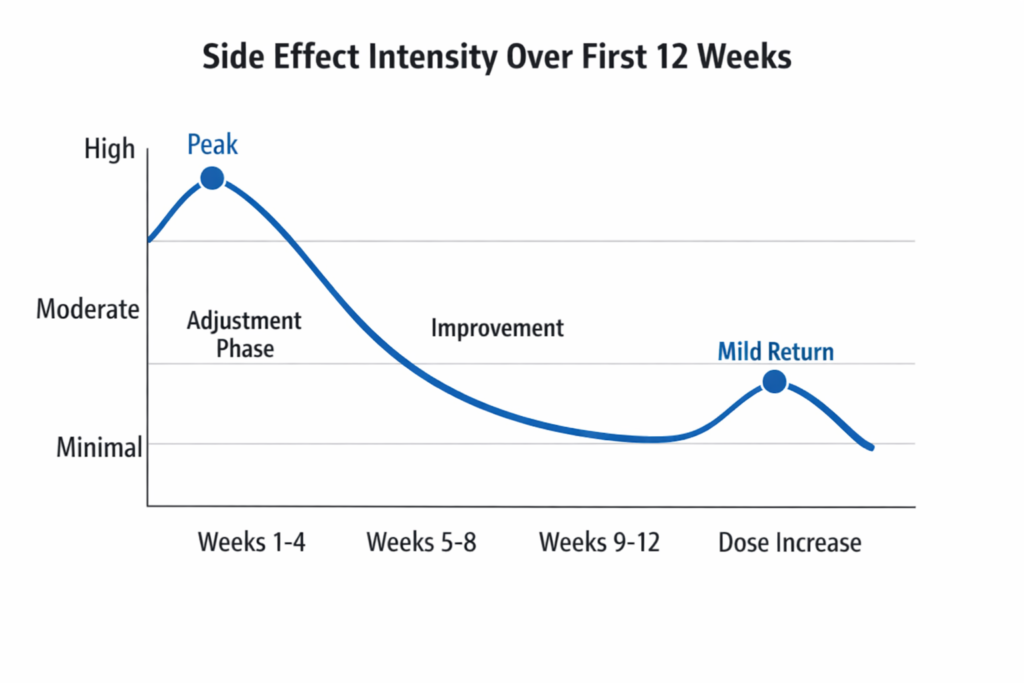
The Timeline:
- Weeks 1-4: Side effects peak (your body is adjusting)
- Weeks 5-8: Noticeable improvement
- Weeks 9-12: Most side effects minimal or gone
- Dose increases: Brief return of mild symptoms, but much less intense
The Truth About Satisfaction:
Despite side effects, 85-90% of users say they’d continue treatment. Why? Because for most people, the benefits of weight loss, improved health markers, and better quality of life far outweigh temporary discomfort.
The Top 5 Side Effects (And How to Fix Them)
1. Nausea (40-50% of Users) – Most Common
What it feels like: Mild to moderate queasiness, especially 1-3 days after your weekly injection. Usually worst after eating rich or fatty foods.
Why it happens: GLP-1 slows stomach emptying, so food sits in your stomach longer than you’re used to.
Quick fixes that actually work:
✅ Eat smaller meals more often (5-6 mini-meals vs. 3 large ones)
✅ Avoid greasy, fried, or very sweet foods for the first 48 hours after injection
✅ Try ginger (tea, chews, or supplements)
✅ Eat slowly – take 20-30 minutes per meal
✅ Time your injection strategically (Friday evening if weekends are easier)
Pro tip from users: “The nausea was real for the first 2-3 weeks, but eating smaller portions of bland foods made a huge difference. By month 2, I barely noticed it.”
When to call your doctor: If you’re vomiting multiple times daily or can’t keep liquids down for 12+ hours.
2. Digestive Changes (30-40% of Users)
What it feels like: Either diarrhea OR constipation (sometimes both at different times). Bloating and gas are also common.
The constipation fix:
✅ Drink 8-10 glasses of water daily
✅ Add fiber gradually (vegetables, fruits, chia seeds)
✅ Take a 15-minute walk after meals
✅ Try magnesium citrate supplement (200-400mg)
The diarrhea fix:
✅ Stay hydrated with electrolytes
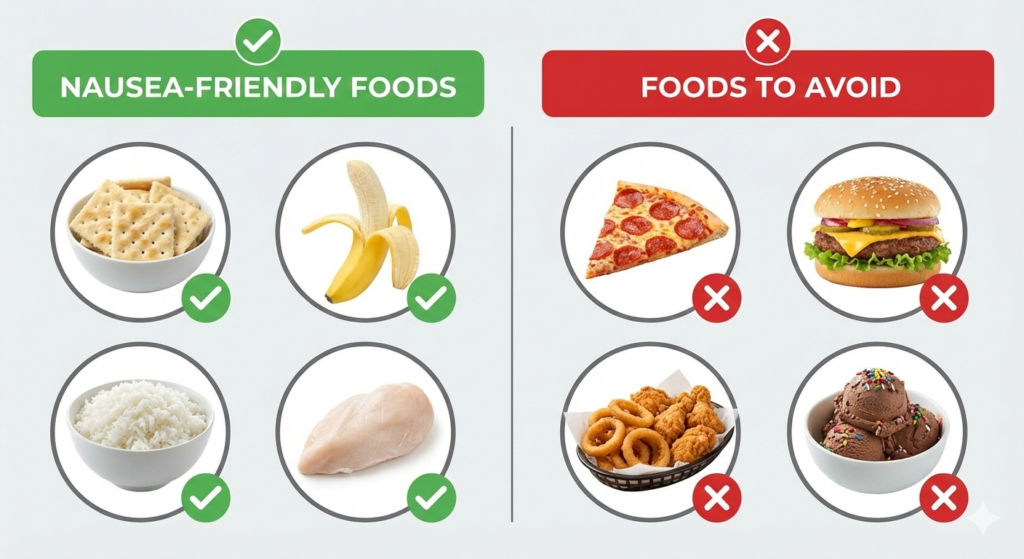
✅ Stick to bland foods temporarily (bananas, rice, toast)
✅ Avoid dairy, caffeine, and artificial sweeteners
✅ Consider probiotics
Reality check: Most digestive issues resolve within 3-4 weeks as your body adjusts to slower digestion.
3. Fatigue (20-30% of Users)
What it feels like: More tired than usual, especially in the first month. Less energy for workouts.
Why it happens: You’re eating significantly fewer calories, and your body is adjusting to metabolic changes.
Energy-boosting strategies:
✅ Don’t skip meals – eat at least 1,200-1,500 calories daily
✅ Prioritize protein – aim for 80-100g daily (eggs, chicken, fish, Greek yogurt, protein shakes)
✅ Take a multivitamin – fill nutritional gaps
✅ Stay hydrated – dehydration worsens fatigue
✅ Get 7-9 hours of sleep
✅ Keep moving – gentle exercise actually increases energy
Important: Extreme fatigue with dizziness or rapid heartbeat needs immediate medical attention! This could signal dehydration or electrolyte imbalance.
4. Decreased Appetite (Almost Everyone)
What it feels like: Food just doesn’t sound appealing. You might forget to eat entirely.
Why this matters: Eating too little can cause muscle loss, hair thinning, and nutrient deficiencies.
How to ensure you’re eating enough:
✅ Set phone reminders to eat every 3-4 hours
✅ Track your food for at least the first month (use MyFitnessPal or similar)
✅ Use protein shakes when solid food is unappealing
✅ Focus on nutrient-dense foods – pack maximum nutrition into smaller portions
The golden rule: The medication should help you eat appropriate amounts, not dangerously low amounts.
5. Injection Site Reactions (5-10% of Users)
What it feels like: Redness, itching, or minor bruising where you inject.
Easy prevention:
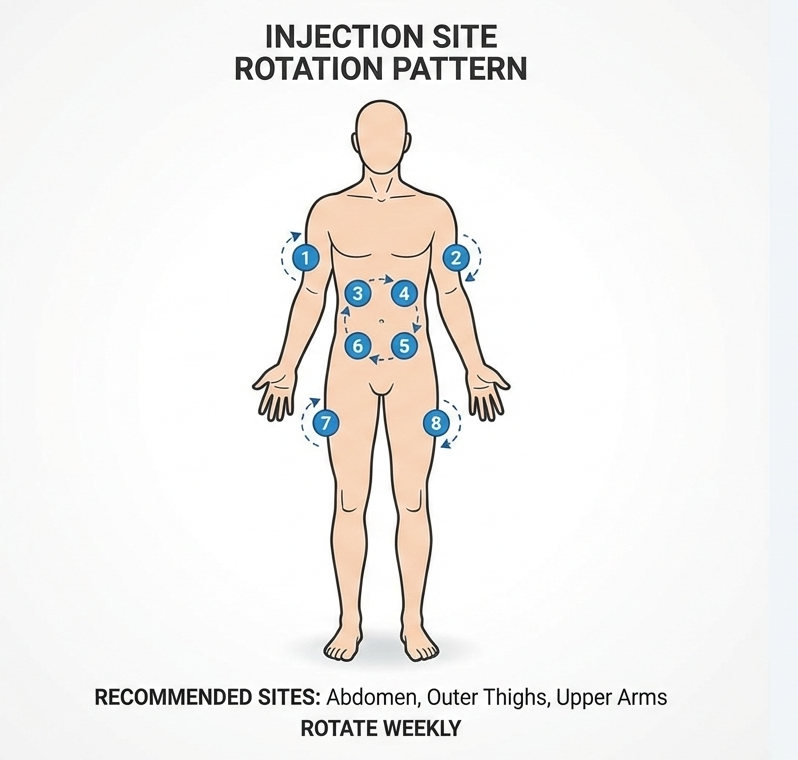
✅ Rotate injection sites (abdomen, thighs, upper arms)
✅ Let medication reach room temperature before injecting
✅ Clean skin with alcohol and let dry completely
✅ Ice the area for a minute before injection
Let’s Talk About “Ozempic Face”
You’ve seen the headlines. Here’s the actual truth:
What it is: Facial volume loss that some people experience with rapid weight loss. This is NOT a direct effect of the medication itself.
Who gets it:
- People over 40 (less skin elasticity)
- Those losing weight very rapidly (3+ lbs/week)
- People with significant sun damage
- Smokers
How to minimize it:
✅ Lose weight gradually (1-2 lbs/week maximum)
✅ Eat plenty of protein (supports skin and muscle)
✅ Stay hydrated (80+ oz water daily)
✅ Use sunscreen daily
✅ Consider collagen supplements (10-15g daily)
The reality: Most people don’t experience significant facial hollowing. And those who do typically say they still prefer their new, healthier body. If it does happen, dermal fillers can easily address it.
Rare But Serious Side Effects (Know the Warning Signs)
These affect less than 1-2% of users, but it’s important to recognize them:
Pancreatitis (Less than 1%)
Red flags: Severe abdominal pain radiating to your back, persistent vomiting, fever
Action: Stop medication and seek immediate medical care
Gallbladder Issues (1-2%)
Red flags: Pain in upper right abdomen, yellowing of skin or eyes, pain after fatty foods
Action: Contact your doctor same day
Severe Dehydration
Red flags: Dark urine, extreme dizziness, rapid heartbeat, confusion
Action: Drink electrolytes immediately; if severe, seek medical care
Severe Allergic Reaction (Extremely Rare)
Red flags: Difficulty breathing, severe rash, swelling of face/throat
Action: Call 911 immediately
Your Side Effect Management Toolkit
Week-by-Week Strategy
Weeks 1-2: The Adjustment Phase
- Start on a weekend when you can rest
- Stock up on bland, easy-to-digest foods (crackers, bananas, rice, chicken)
- Stay hydrated (aim for 8 glasses water daily)
- Expect mild nausea. This is normal
- Keep meals small and frequent
Weeks 3-4: Finding Your Rhythm
- Side effects should start improving
- Establish consistent meal timing
- Begin tracking protein and calorie intake
- Gentle exercise (walking) helps digestion
Weeks 5-8: Dose Increases
- Expect brief return of mild nausea with each dose increase
- Apply same strategies that worked initially
- Less intense than first dose
Weeks 9-12: The Sweet Spot
- Most side effects minimal or resolved
- Focus on building sustainable habits
- Energy levels normalizing
- Results becoming visible
Your Daily Checklist
✅ Drink 8-10 glasses of water
✅ Eat protein at every meal (25-30g per meal)
✅ Take your multivitamin
✅ Set meal reminders
✅ Move your body (even 15 minutes)
✅ Get 7-9 hours of sleep
Foods That Help vs. Foods That Hurt
Side-Effect-Friendly Foods:
- Lean proteins: chicken, fish, eggs, Greek yogurt
- Complex carbs: oatmeal, sweet potato, brown rice
- Gentle vegetables: carrots, zucchini, spinach
- Fruits: bananas, apples, berries
- Ginger and peppermint tea
Foods to Limit (Especially First Month):
- Greasy, fried foods
- Very spicy foods
- Heavy dairy (can worsen nausea)
- Carbonated beverages
- Alcohol
- High-sugar treats
When to Call Your Healthcare Provider
Call within 24 hours if:
- Side effects aren’t improving after 2-3 weeks
- You’re unable to eat enough food (under 1,000 calories daily)
- Persistent vomiting or diarrhea (more than 2-3 days)
- Extreme fatigue interfering with daily life
- Concerns about hair loss or skin changes
Call immediately or go to ER if:
- Severe abdominal pain
- Can’t keep fluids down for 12+ hours
- Chest pain or difficulty breathing
- Severe dizziness or fainting
- Signs of allergic reaction
- Yellowing of skin or eyes
The Bottom Line: Are Side Effects Worth It?
Let’s look at what actually happens to most people who start GLP-1 medications:
Month 1: “The nausea was annoying, but manageable with small meals and ginger tea.”
Month 2: “Side effects are way better. I’ve lost 12 pounds and my energy is good.”
Month 3: “Honestly, I barely think about side effects anymore. Down 20 pounds, and my doctor says my A1C is normal for the first time in years.”
Month 6: “Best decision I’ve made. The first month was rough, but totally worth it.”
What the Data Shows
- 85-90% of users continue treatment despite side effects
- Most side effects resolve within 4-8 weeks
- Serious side effects remain very rare (under 2%)
- Health benefits extend far beyond weight loss (blood sugar, blood pressure, cardiovascular risk)
The Honest Truth
Will you have side effects? Probably some mild ones, especially the first month.
Will they be unbearable? For most people, no (especially with the management strategies in this guide).
Are they temporary? Yes, for the vast majority of users.
Are the results worth temporary discomfort? That’s a personal decision, but 85-90% of users say absolutely yes.
Key Takeaways
✅ Side effects are common but usually mild and temporary (4-8 weeks)
✅ Nausea is #1 – managed with small frequent meals, bland foods, and ginger
✅ Proper hydration and adequate protein are your best defenses
✅ Gradual dose escalation minimizes intensity of side effects
✅ “Ozempic face” is preventable with gradual weight loss (1-2 lbs/week)
✅ Serious side effects are rare but important to recognize
✅ Most people find benefits far outweigh temporary discomfort
Your Next Steps
Now that you have realistic expectations about side effects, you can make an informed decision about whether GLP-1 medications are right for you.
Continue your research:
- How Do GLP-1 Weight Loss Medications Work?
- Do I Qualify for GLP-1 Medication?
- What Should I Eat While Taking GLP-1 Medications?
- Best Online GLP-1 Programs in 2026: Skinny Rx, Eden, Medvi, and Elevate Compared Side by Side
- What Do I Need to Know About GLP‑1 Weight Loss? 15 Most Asked Questions Answered
Remember: every person’s experience is unique. Work closely with your healthcare provider, use the management strategies in this guide, and give your body time to adjust. The first month is the hardest, but it gets significantly easier!
Medical Disclaimer: This article is for informational purposes only and does not constitute medical advice. Side effects vary by individual. Always consult with a qualified healthcare provider before starting GLP-1 medications and report any concerning symptoms immediately. GLP-1 medications require a prescription and medical supervision.
Sources: Information compiled from FDA prescribing information, clinical trials published in NEJM, JAMA, and Lancet (2022-2026), real-world patient data, and manufacturer safety reports.
Last Updated: February, 2026