
Quick Answer:
GLP-1 medications work by mimicking a natural hormone that regulates hunger, digestion, and blood sugar. They reduce appetite signals in the brain, slow stomach emptying, and improve insulin response. Most people lose 15-20% of their body weight over 12 months when used under medical supervision.
GLP-1 medications like Ozempic, Wegovy, Mounjaro, and Zepbound have changed how obesity is treated. For many people, they succeed where dieting, exercise, and traditional weight loss pills never worked.
But what is actually happening inside your body when you take a GLP-1 medication? Why do these drugs feel so different from appetite suppressants? And what makes the weight loss more sustainable?
This guide explains the science in plain English so you can understand how GLP-1 medications work and what to realistically expect.
In This Guide
- What GLP-1 means and why it matters
- How GLP-1 medications promote weight loss
- GLP-1 vs dual-agonist medications like tirzepatide
- Why GLP-1 drugs are different from diet pills
- What most people experience over time with GLP-1 Medications
- Who GLP-1 medications may not be appropriate for
- Common Questions About How GLP-1 Works
- Next Steps
- Final Thoughts
What Does GLP-1 Mean?
GLP-1 stands for glucagon-like peptide-1. It is a hormone your body naturally releases from the intestines after you eat.
Its job is to help regulate:
- Appetite and fullness
- Blood sugar levels
- Digestion speed
- Insulin release
You can think of GLP-1 as one of your body’s natural “I’m full” signals.
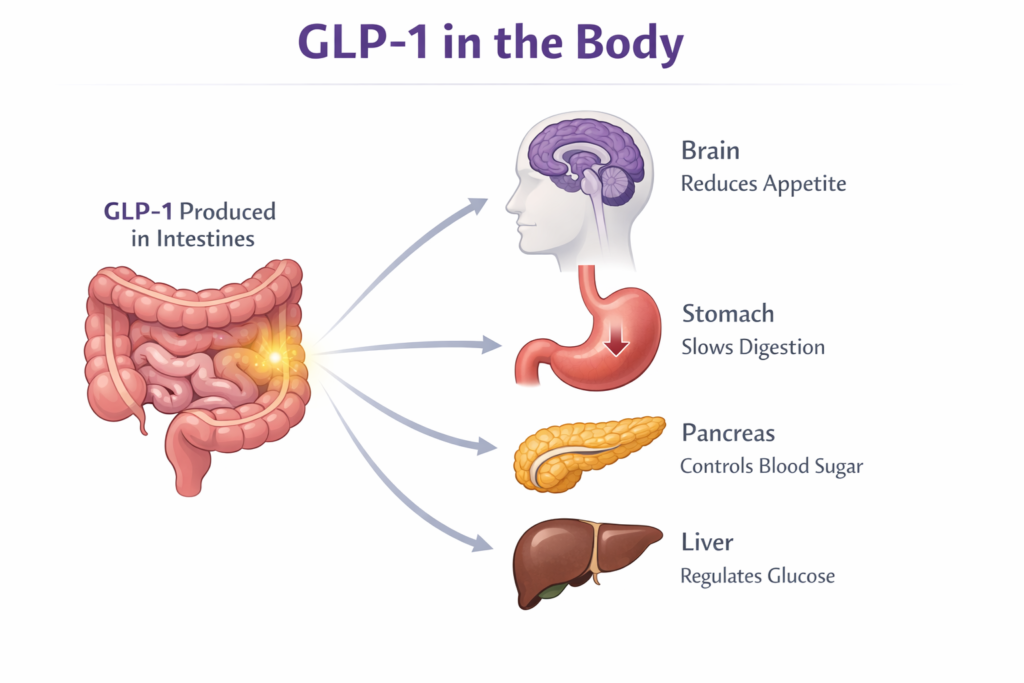
After a meal, GLP-1 travels through the bloodstream and communicates with several organs:
- Brain: reduces hunger and food cravings
- Stomach: slows digestion so you stay full longer
- Pancreas: helps control insulin release
- Liver: limits excess glucose production
The problem is timing. Natural GLP-1 only stays active for a few minutes before it breaks down.
GLP-1 medications mimic this hormone but last much longer, anywhere from one day to a full week depending on the medication.
Natural GLP-1 vs GLP-1 Medications
How Long GLP-1 Stays Active: Natural vs Medication:
Natural GLP-1: Active for 2-3 minutes after eating
Daily GLP-1 medications (liraglutide): 24-hour coverage
Weekly GLP-1 injection medications (semaglutide): 7-day sustained levels
This extended activity is the main reason GLP-1 medications are effective for weight loss.
| Feature | Natural GLP-1 | GLP-1 Medications |
| Duration | 2 to 3 minutes | 24 hours to 7 days |
| Release | Only after eating | Consistent levels |
| Breakdown | Rapid | Resistant to breakdown |
| Appetite effect | Mild and short | Strong and sustained |
How GLP-1 Medications Promote Weight Loss
GLP-1 medications do not rely on stimulation or willpower. They change how your body regulates hunger and energy.
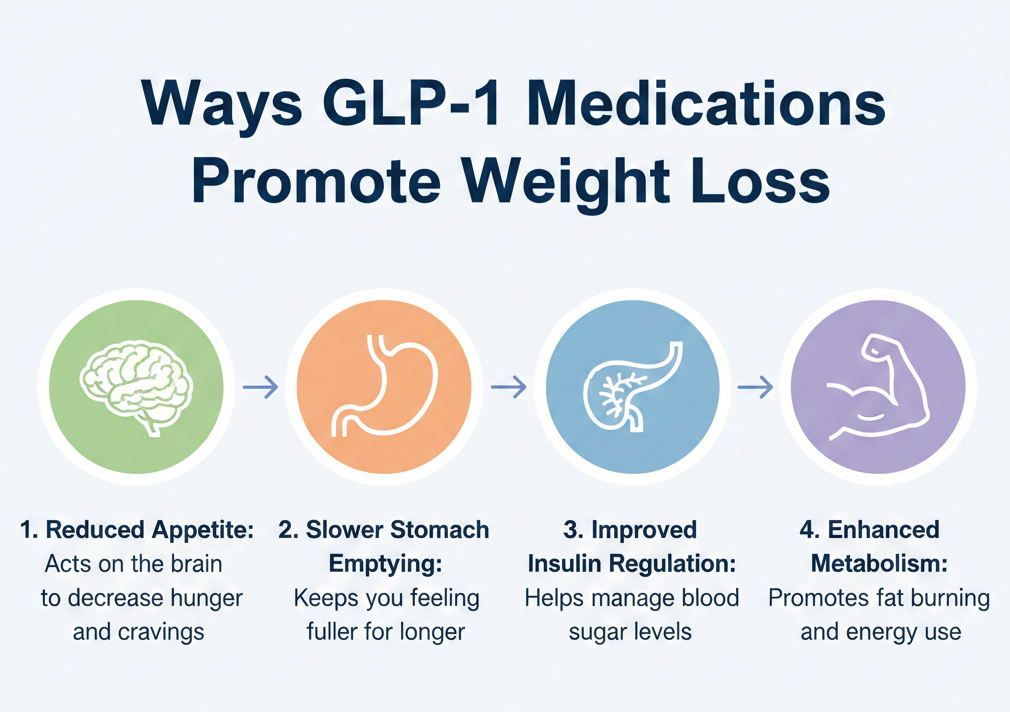
1. Appetite Signals Quiet Down
GLP-1 medications activate receptors in the hypothalamus, the part of the brain that controls hunger and satiety.
Most people notice:
- Less interest in food between meals
- Smaller portions feel satisfying
- Reduced cravings and snacking
- Fewer constant thoughts about food
Many users describe this as food becoming “quieter” rather than feeling forced to restrict.
2. Digestion Slows, So Fullness Lasts Longer
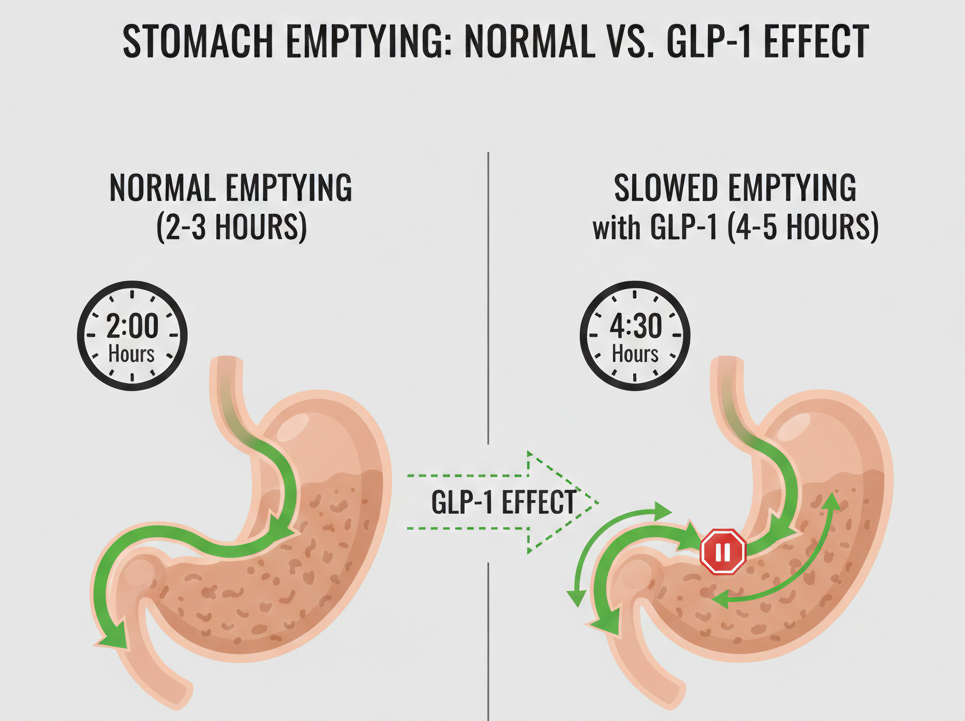
GLP-1 medications slow gastric emptying, meaning food stays in the stomach longer.
This leads to:
- Longer-lasting fullness after meals
- Fewer blood sugar spikes
- Less rebound hunger
Meals that once left you hungry again after two hours may now keep you full for four to six hours.
3. Blood Sugar Control Improves
GLP-1 medications help the pancreas release insulin only when blood sugar rises.
This glucose-dependent action:
- Improves energy stability
- Reduces sugar crashes
- Lowers insulin resistance
- Improves A1C levels in many users
This is why these medications were originally developed for type 2 diabetes.
4. Metabolism May Become More Efficient
Emerging research suggests GLP-1 medications may:
- Help preserve lean muscle during weight loss
- Improve fat oxidation
- Support mitochondrial function
This effect is smaller than appetite reduction but may contribute to better body composition compared to crash dieting.
GLP-1 vs Dual-Agonist Medications
There are two main categories of modern weight loss injections.
GLP-1 Agonists
- Semaglutide (Ozempic, Wegovy)
- Liraglutide (Saxenda)
Dual GLP-1/GIP Agonists
- Tirzepatide (Mounjaro, Zepbound)
Dual-agonist medications activate both GLP-1 and GIP receptors.
GIP adds additional metabolic effects, including:
- Enhanced insulin response
- Improved fat metabolism
- Potentially greater weight loss
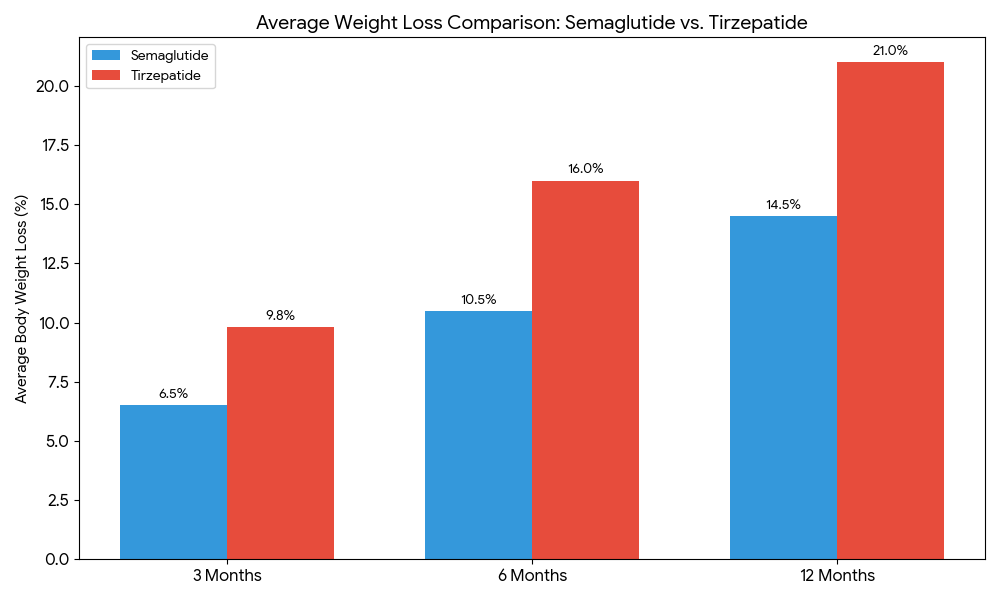
Clinical trials show average results of:
- Semaglutide: about 15 to 18 percent body weight loss
- Tirzepatide: about 20 to 25 percent body weight loss
In the SURMOUNT-1 trial, participants taking the highest dose of tirzepatide lost an average of 22.5% of their body weight over 72 weeks, compared to 2.4% with placebo.
Individual response varies. Some people tolerate one medication better than another.
Why GLP-1 Medications Are Different From Diet Pills
Traditional diet pills typically rely on stimulants like caffeine or sympathomimetics.
GLP-1 medications work differently.
| Diet Pills | GLP-1 Medications |
| Stimulate nervous system | Work with hormone pathways |
| Short-lived appetite suppression | Long-lasting satiety |
| Tolerance builds quickly | Stable effects over time |
| Often cause jitters or anxiety | Generally manageable side effects |
| Minimal metabolic benefit | Improve insulin sensitivity |
Instead of fighting your biology, GLP-1 medications work with it.
What Most People Experience Over Time
Early Weeks
- Appetite reduction within days
- Smaller portions feel natural
- Mild nausea is possible
- Early weight loss of a few pounds
First 3 to 6 Months
- Steady weekly weight loss
- Appetite feels consistently controlled
- Eating habits begin to change naturally
- Blood sugar and energy improve
12 Months and Beyond
- Average total loss of 15 to 20 percent of starting weight
- Focus shifts toward maintenance
- Lifestyle habits feel more automatic
Who GLP-1 Medications May Not Be Appropriate For
GLP-1 medications are not right for everyone.
They may not be recommended for people with:
- Personal or family history of medullary thyroid cancer
- Certain endocrine disorders
- Severe gastrointestinal diseases
- Active eating disorders
- Pregnancy or breastfeeding
A licensed healthcare provider should always determine eligibility.
Check to see if you qualify for GLP-1’s by taking SkinnyRx’s online quiz.
Do You Need to Take GLP-1 Medications Long Term?
Obesity is a chronic metabolic condition for many people.
Research shows that stopping GLP-1 medications often leads to:
- Appetite returning within weeks
- Partial weight regain over time
Some people maintain results after stopping, especially if they build strong habits and muscle mass. Many others continue on a maintenance dose long term, similar to blood pressure or cholesterol medication.
There is no single correct approach. This decision should be made with a healthcare provider.
Common Questions About How GLP-1 Works
How quickly do GLP-1 medications start working?
Most people notice reduced appetite within 2-4 days of their first injection. Blood sugar improvements often appear within the first week. Maximum weight loss effects typically build over 3-6 months as the dose is gradually increased.
Do GLP-1 medications damage your metabolism?
No. Unlike crash diets that can slow metabolism, GLP-1 medications work with your body’s natural hormone systems. They may actually help preserve metabolic function by improving insulin sensitivity and supporting more gradual weight loss.
Can your body become dependent on GLP-1 medications?
GLP-1 medications are not addictive and do not create physical dependence. However, the underlying biological drivers of obesity often return when treatment stops, which is why many people continue on maintenance doses.
- GLP-1 medications mimic a natural hormone but last much longer
- They reduce hunger, slow digestion, and improve blood sugar control
- They are not stimulants and are not addictive
- Dual-agonist medications (tirzepatide) may offer greater weight loss for some people
- Long-term success is highest when combined with sustainable habits
- Medical supervision is essential
Next Steps
If you are considering GLP-1 treatment, these guides can help:
- Best Online GLP-1 Programs in 2026: Skinny Rx, Eden, Medvi, and Elevate Compared Side by Side
- Do I Qualify for GLP-1 Weight Loss Medication?
- GLP-1 Side Effects and How to Manage Them
- Semaglutide vs Tirzepatide: Which Is Better?
- What Should I Eat While Taking GLP-1 Medications? Complete Diet Plan for Semaglutide and Tirzepatide
Final Thoughts
GLP-1 medications represent one of the most meaningful advances in weight loss treatment in decades. They do not replace healthy habits, but they make those habits possible for people who have struggled for years.
Understanding how these medications work allows you to approach treatment with realistic expectations and informed confidence.
Medical Disclaimer:
This content is for educational purposes only and does not provide medical advice. GLP-1 medications require evaluation and supervision by a licensed healthcare provider. Individual results vary. Always consult a qualified professional before starting any medication.
Sources: FDA prescribing information, peer-reviewed clinical trials (NEJM, JAMA, Lancet, Diabetes Care), and manufacturer clinical data.
Affiliate disclosure: This article contains affiliate links. If you click on a link and end up purchasing a GLP-1 program or medication, we may earn a commission at no extra cost to you. This helps us keep researching and updating honest, in-depth guides about GLP-1 options.
Our comparison is based on extensive research, real user feedback, and program analysis
Last Updated: February 2026