
Quick Answer:
Yes, hair loss (technically called telogen effluvium) affects about 70% of people taking GLP-1 medications like Ozempic, Wegovy, Mounjaro, and Zepbound in real-world use. That’s far higher than the 3-7% reported in clinical trials.
What you need to know:
- Hair shedding typically starts 2-3 months after starting treatment
- It’s usually caused by rapid weight loss, not the medication itself
- Hair grows back on its own in most cases within 6-12 months
- You can minimize shedding with proper nutrition and gradual weight loss
- Only rarely does it require medical treatment
If you’re finding more hair in your shower drain since starting your GLP-1 medication, you’re not alone. And more importantly, it’s almost always temporary.
A solid option to help manage aggressive wightloss resulting in hairloss is microdosing. SkinnyRx is offering a new microdosing program that could be the solution you are looking for!
Starting a GLP-1 medication like Ozempic, Wegovy, Mounjaro, or Zepbound can feel like a miracle for weight loss. The pounds start melting off, your blood sugar stabilizes, and you finally feel in control of your eating.
Then one day, you notice it. More hair than usual on your pillow. Clumps in the shower drain. Your ponytail feels thinner. You run your fingers through your hair and a few strands come out easily.
Suddenly, you’re faced with an unsettling question: Is my weight loss medication making me lose my hair?
The short answer is yes, but probably not in the way you think. Let me explain what’s actually happening, why it occurs, and most importantly, what you can do about it.
In This Guide
- Understanding Hair Loss from GLP-1 Medications
- How Telogen Effluvium Works
- Why Some People Are Hit Harder Than Others
- How to Minimize Hair Loss on GLP-1 Medications
- What About Switching GLP-1 Medications?
- When Hair Loss Might Not Be Telogen Effluvium
- What Your Doctor Should Check
- Treatment Options If Needed
- The Bottom Line on GLP-1 Hair Loss
- Frequently Asked Questions
- Key Takeaways
- Your Next Steps
Understanding Hair Loss from GLP-1 Medications
First, let’s get clear on something important: hair loss from GLP-1 medications is real and common, but it’s almost always temporary. This isn’t permanent baldness. Your hair follicles aren’t being damaged. This is a specific type of hair loss called telogen effluvium, and it’s actually your body’s normal response to rapid change.
What the Research Actually Shows
Clinical trials for GLP-1 medications reported hair loss (listed as “alopecia” in medical terms) in only 3-7% of participants. But here’s the thing: those trials were carefully controlled, monitored closely, and participants were given extensive nutritional support.
In the real world? The numbers tell a different story.
A 2024 survey of over 1,200 people using GLP-1 medications found that approximately 70% experienced noticeable hair shedding. That’s a huge difference from the clinical trial data, and it tells us something important: the hair loss isn’t really about the medication itself.
The Real Culprit: Rapid Weight Loss
Here’s what’s actually happening. When you lose weight quickly (especially more than 1-2 pounds per week), your body interprets this as a form of physical stress. It doesn’t matter whether that weight loss comes from GLP-1 medications, bariatric surgery, extreme dieting, or illness. Rapid weight loss triggers the same response.
Your body essentially says, “We need to conserve resources for essential functions.” Hair growth isn’t considered essential (even though it feels that way to us), so it gets put on the back burner.
This triggers something called telogen effluvium. Let me break down what that means.
How Telogen Effluvium Works
Your hair goes through three phases:
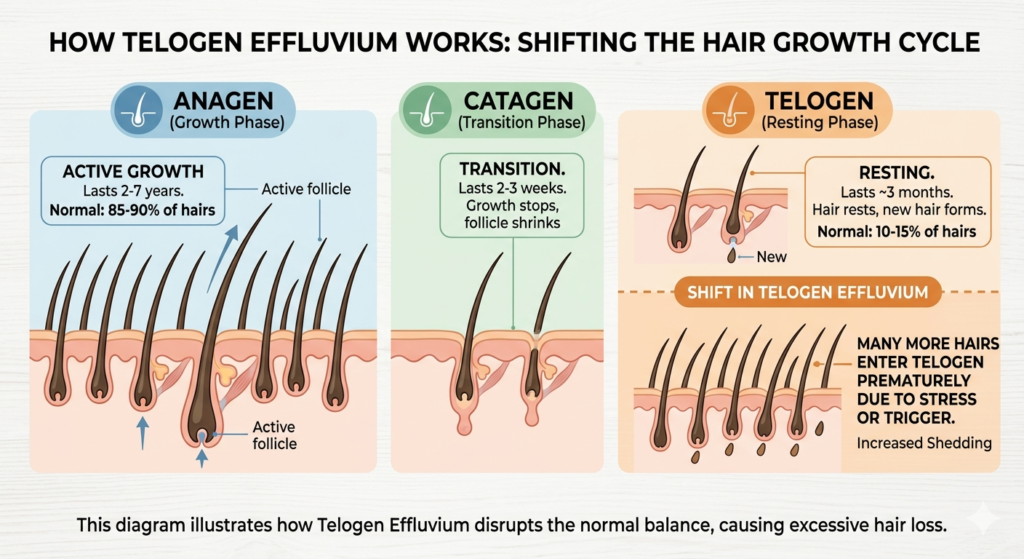
Anagen (Growth Phase): This lasts 2-7 years. About 85-90% of your hair is in this phase at any given time, actively growing.
Catagen (Transition Phase): This brief 2-3 week period is when growth stops and the follicle shrinks.
Telogen (Resting Phase): This lasts about 3 months. The hair rests while a new hair begins growing beneath it. About 10-15% of your hair is normally in this phase.
In telogen effluvium, something stressful (like rapid weight loss) pushes a much larger percentage of your hair into the telogen phase all at once. Instead of 10-15% of your hair resting, it might be 30-40% or even more.
Then, about 2-3 months later when those hairs reach the end of their resting phase, they all shed at once. This is why you don’t notice hair loss immediately when you start your GLP-1 medication. The shedding happens months later, which can make it confusing to connect the dots.
The Timeline of GLP-1 Hair Loss
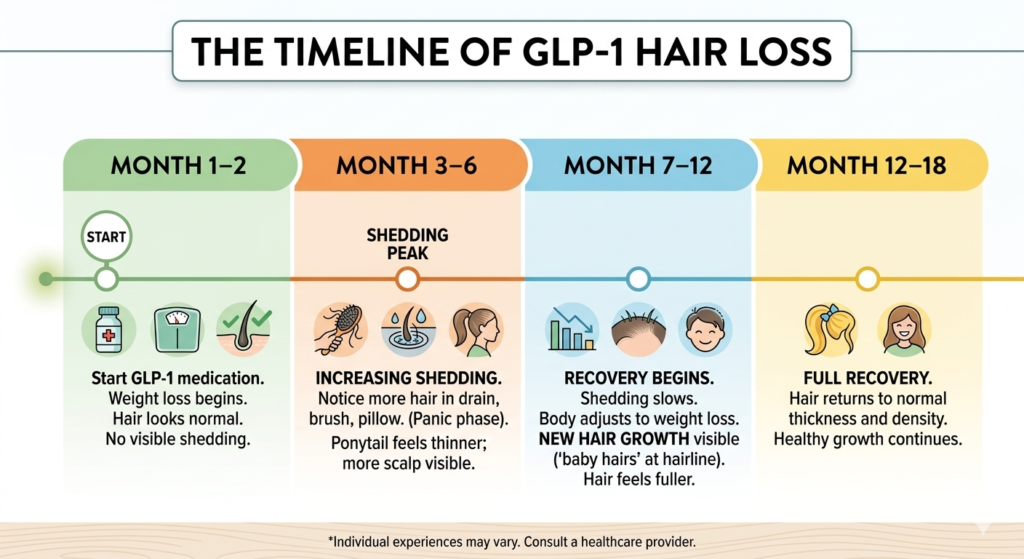
Here’s what the typical timeline looks like:
Month 1-2: You start your GLP-1 medication. Weight loss begins. Your hair looks normal. Everything seems fine.
Month 3-4: You notice increased hair shedding. More hair in the shower drain, on your pillow, in your brush. This is when panic often sets in.
Month 5-6: Shedding may peak. This is usually the worst of it. Your ponytail might feel noticeably thinner, or you might see more scalp showing through.
Month 7-9: Shedding starts to slow down as your body adjusts to your new weight and the rapid loss phase ends.
Month 10-12: New hair growth becomes visible. You’ll notice short “baby hairs” along your hairline. Your hair starts feeling fuller again.
Month 12-18: Full recovery. Your hair returns to its normal thickness and density.
This timeline can vary based on how quickly you’re losing weight, your nutritional status, and your individual biology, but it gives you a general idea of what to expect.
Why Some People Are Hit Harder Than Others
Not everyone experiences the same degree of hair loss on GLP-1 medications. Several factors influence how much shedding you might experience:
Rate of Weight Loss
This is the biggest factor. Losing 20 pounds in a month puts far more stress on your body than losing 20 pounds over four months. People who start at higher doses or lose weight very quickly tend to experience more hair shedding.
Nutritional Status
If you’re not getting enough protein, iron, biotin, or other essential nutrients, hair loss could be worse. This is especially common with GLP-1 medications because they can make eating difficult when nausea and early satiety kick in.
Pre-existing Deficiencies
If you already had low iron stores, vitamin D deficiency, or thyroid issues before starting your GLP-1 medication, those problems can compound the hair loss from rapid weight loss.
Genetics
Some people are simply more prone to telogen effluvium than others. If you’ve experienced hair shedding with previous weight loss, illness, or stress, you’re more likely to experience it with GLP-1s.
Age and Hormones
Women going through perimenopause or menopause may experience more pronounced hair changes. Hormonal fluctuations can make the hair follicles more sensitive to stress.
How to Minimize Hair Loss on GLP-1 Medications
While you can’t completely prevent telogen effluvium from rapid weight loss, you can absolutely minimize it. Here’s what actually works based on research and clinical experience:
1. Slow Down Your Weight Loss
I know this sounds counterintuitive when you’re excited about finally losing weight, but hear me out. Aim for 1-2 pounds per week rather than 3-4 pounds. This gives your body time to adjust.
How to do this:
- Start with the lowest effective dose of your GLP-1 medication
- Titrate up slowly, only increasing doses as needed
- Don’t rush to the maximum dose just because it’s available
- Talk to your doctor about a gentler titration schedule
2. Prioritize Protein
This is non-negotiable. Hair is made of protein (specifically keratin), and if you’re not eating enough protein, your body will sacrifice hair growth to preserve muscle and organ function.
Protein targets:
- Aim for 80-100 grams of protein daily minimum
- Try to get 25-30 grams at each meal
- Include protein at every meal and snack
Good protein sources:
- Lean meats (chicken, turkey, lean beef)
- Fish and seafood
- Eggs
- Greek yogurt
- Cottage cheese
- Protein shakes (especially helpful when appetite is low)
- Legumes and beans
- Tofu and tempeh

One of the challenges with GLP-1 medications is that they suppress your appetite, making it harder to eat enough protein. This is where protein shakes can be a game changer. They’re easier to get down when you’re not hungry and provide concentrated protein in a small volume.
3. Take Strategic Supplements
While supplements won’t reverse hair loss that’s already happening, they can help minimize future shedding and support regrowth.
Key supplements for hair health:
Biotin: 2.5-5 mg daily. This B vitamin supports hair growth and strength. Note that high-dose biotin can interfere with some lab tests, so tell your doctor if you’re taking it.
Iron: Only if you’re deficient (get tested first). Ferritin levels should be above 40 ng/mL for optimal hair growth, ideally 70-80 ng/mL. Don’t supplement iron without testing, as too much can be harmful.
Vitamin D: 2,000-4,000 IU daily or as recommended by your doctor based on blood levels. Vitamin D deficiency is linked to hair loss.
Zinc: 15-30 mg daily. Zinc deficiency can contribute to hair shedding. Don’t exceed 40 mg daily without medical supervision.
A high-quality multivitamin: This covers your bases and helps prevent deficiencies that can worsen hair loss.
Omega-3 fatty acids: 1,000-2,000 mg daily from fish oil or algae oil. These support scalp health and may reduce inflammation.
4. Consider Hair-Specific Supplements
Several supplements are specifically marketed for hair growth. The evidence is mixed, but some people find them helpful:
Nutrafol: This popular supplement contains saw palmetto, ashwagandha, curcumin, and marine collagen. Some studies show benefits, though it’s pricey at around $80-90 per month.
Viviscal: Contains marine protein complex and has some clinical evidence supporting its use for hair growth.
Collagen peptides: 10-20 grams daily. Some research suggests collagen supplementation can improve hair thickness and growth.
5. Use Topical Treatments
Minoxidil (Rogaine): This over-the-counter treatment can help stimulate hair growth and is generally safe to use alongside GLP-1 medications. The 5% foam for women or 5% solution for men is most effective. It takes 3-4 months to see results, and you need to keep using it to maintain benefits.
Rosemary oil: Some small studies suggest rosemary oil may be as effective as 2% minoxidil. Mix a few drops with a carrier oil (like jojoba or coconut) and massage into your scalp 2-3 times weekly.
Scalp massage: Spending 5-10 minutes daily massaging your scalp may increase blood flow to hair follicles and potentially support growth. It’s free, feels good, and can’t hurt.
6. Be Gentle with Your Hair
When you’re experiencing telogen effluvium, your hair is more fragile. Minimize additional damage:
Do:
- Use a wide-tooth comb on wet hair
- Let hair air-dry when possible
- Use silk or satin pillowcases to reduce friction
- Keep hairstyles loose (avoid tight ponytails or braids)
- Be gentle when brushing
Avoid:
- Excessive heat styling (blow dryers, flat irons, curling irons)
- Harsh chemical treatments (bleaching, perms, relaxers)
- Tight hairstyles that pull on the hair
- Aggressive brushing or combing
- Over-washing (2-3 times per week is usually sufficient)
7. Manage Stress
I know, easier said than done. But chronic stress can worsen telogen effluvium and slow recovery. Plus, you’re already putting your body through the stress of rapid weight change.
Stress management strategies:
- Regular exercise (even just walking)
- Meditation or mindfulness practice
- Adequate sleep (7-9 hours nightly)
- Social support and connection
- Professional counseling if needed
- Limiting caffeine and alcohol
8. Stay Hydrated
Dehydration can make hair brittle and more prone to breakage. Aim for at least 8 glasses of water daily, more if you’re exercising or in a hot climate.
What About Switching GLP-1 Medications?
This is a common question: “If I switch from Ozempic to Mounjaro, will my hair stop falling out?”
The short answer is probably not. Since the hair loss is primarily triggered by rapid weight loss rather than the specific medication, switching from one GLP-1 to another isn’t likely to help. You’ll still be losing weight rapidly, which means your body will still respond with telogen effluvium.
That said, there are some scenarios where switching might make sense:
If you’re experiencing other severe side effects: Hair loss plus severe nausea, vomiting, or other intolerable side effects might warrant trying a different medication.
If you want to slow down weight loss: Switching to a less potent GLP-1 or lowering your dose can slow weight loss and potentially reduce hair shedding. Talk to your doctor about this option.
If you suspect a true drug reaction: In very rare cases, someone might have an allergic or idiosyncratic reaction to a specific GLP-1 medication. If you have other symptoms like rash, severe itching, or unusual reactions, discuss alternatives with your doctor.
When Hair Loss Might Not Be Telogen Effluvium
While most hair loss from GLP-1 medications is telogen effluvium, there are other conditions that can cause hair shedding. You should see a doctor if you experience:
Patchy bald spots: This could indicate alopecia areata, an autoimmune condition.
Hair loss in a specific pattern: Widening part line in women or receding hairline in men might suggest androgenetic alopecia (pattern baldness).
Scalp symptoms: Itching, burning, scaling, or pain could indicate a scalp condition like seborrheic dermatitis or infection.
Sudden, severe shedding: Losing handfuls of hair at once is not typical telogen effluvium.
Hair loss with other symptoms: If you’re also experiencing fatigue, weight gain (despite the GLP-1), cold intolerance, or dry skin, get your thyroid checked.
No improvement after 6 months: If shedding continues without any signs of slowing after six months, further evaluation is needed.
What Your Doctor Should Check
If you’re concerned about your hair loss, your doctor should run some basic tests to rule out other causes:
Blood tests:
- Complete blood count (CBC) to check for anemia
- Ferritin to assess iron stores (should be >40 ng/mL, ideally 70-80)
- Thyroid panel (TSH, Free T4, Free T3) to rule out thyroid dysfunction
- Vitamin D levels
- Zinc levels
- Comprehensive metabolic panel to check overall health
Scalp examination:
- Visual inspection for signs of inflammation, scarring, or infection
- Pull test to assess active shedding
- Dermoscopy if pattern baldness is suspected
Treatment Options If Needed
In most cases, telogen effluvium from GLP-1 medications resolves on its own without medical intervention. However, if hair loss is severe or prolonged, your doctor might recommend:
Prescription-strength minoxidil: Higher concentrations (7% or 10%) may be more effective than over-the-counter 5% formulations.
Spironolactone: For women with androgenetic alopecia (pattern baldness) in addition to telogen effluvium. This prescription medication blocks androgens that can contribute to hair loss.
Low-level laser therapy: FDA-cleared laser devices can stimulate hair growth, though they’re expensive ($200-800).
Platelet-rich plasma (PRP) injections: Some dermatologists offer PRP treatments where your own blood is processed and injected into the scalp to stimulate growth. Evidence is mixed, and it’s pricey ($500-2,000 per session).
In severe cases, temporarily pausing or reducing your GLP-1 dose: Always consult your doctor first. This should only be considered if hair loss is severe and affecting your quality of life. The health benefits of weight loss usually outweigh temporary hair shedding.
The Bottom Line on GLP-1 Hair Loss
Hair shedding from GLP-1 medications is real, common, and frustrating. But here’s the good news: it’s almost always temporary. For most people, hair grows back completely within 6-12 months as your body adjusts to your new weight.
Here’s what you need to remember:
- Hair loss from GLP-1s is usually telogen effluvium caused by rapid weight loss, not the drug itself
- It typically starts 2-3 months after beginning treatment and peaks around months 4-6
- Recovery happens naturally in most cases once your weight stabilizes
- Proper nutrition (especially protein, iron, and biotin) can minimize shedding
- Medical intervention is rarely needed, but it’s available if hair loss is severe or prolonged
If you’re experiencing hair loss on Ozempic, Wegovy, Mounjaro, or Zepbound, try not to panic. Focus on the strategies I’ve outlined above, be patient with the regrowth process, and remember this: you’re losing weight and gaining health. Your hair will catch up.
To get structured nutrition and support (which can help minimize hair loss), consider programs like Yucca that include doctor-led plans and 24/7 support.
Frequently Asked Questions
Does hair loss from GLP-1 medications go away?
Yes, in the vast majority of cases. Hair loss from GLP-1 medications is typically temporary telogen effluvium triggered by rapid weight loss. Your hair usually starts regrowing 3-6 months after shedding begins, with full recovery happening within 6-12 months. Less than 5% of people experience prolonged hair thinning that needs medical intervention.
Which GLP-1 medication causes the most hair loss?
All GLP-1 medications (Ozempic, Wegovy, Mounjaro, Zepbound) can cause hair loss at similar rates. Why? Because the shedding is primarily caused by rapid weight loss, not the medication itself. Zepbound and Mounjaro might be associated with slightly higher rates simply because they tend to produce faster weight loss. The key factor is how quickly you lose weight, not which specific drug you’re taking.
How can I prevent hair loss while on GLP-1s?
While you can’t completely prevent hair loss from rapid weight loss, you can definitely minimize it. Here’s how: eat 80-100g of protein daily, take a high-quality multivitamin with iron and biotin, stay well-hydrated, manage your stress levels, and aim for gradual weight loss (1-2 pounds per week) rather than jumping to the maximum dose right away. Starting with lower doses and titrating slowly gives your body more time to adjust.
Should I stop taking my GLP-1 medication if I’m losing hair?
No, don’t stop your medication without consulting your doctor first. Hair loss from GLP-1s is almost always temporary and self-resolving, while the health benefits of weight loss are substantial and long-lasting. If your hair loss is severe or accompanied by other symptoms, talk to your doctor about potentially reducing your dose temporarily or adding supportive treatments like minoxidil.
Will my hair grow back thicker after GLP-1 hair loss?
Your hair should return to its pre-treatment thickness and density once the telogen effluvium resolves (typically within 6-12 months). It won’t grow back thicker than before, but it should return to normal. During the regrowth phase, you may notice lots of short “baby hairs” along your hairline. This is actually a good sign that recovery is underway.
Key Takeaways
- Hair loss from GLP-1s is common but temporary: About 70% of people experience noticeable shedding, but it almost always resolves within 6-12 months
- It’s the weight loss, not the drug: Telogen effluvium is triggered by rapid weight loss (any method), not the GLP-1 medication itself
- Timing is predictable: Shedding typically starts 2-3 months after beginning treatment and peaks around months 4-6
- Protein is critical: Eating 80-100g of protein daily is the single most important thing you can do to minimize hair loss
- Slower is better: Gradual weight loss (1-2 pounds per week) reduces the stress on your body and limits shedding
- Medical treatment is rarely needed: Most cases resolve naturally without intervention, though supportive treatments like minoxidil can help
- Your hair will grow back: Full recovery typically occurs within 12-18 months as your body adjusts to your new weight
Your Next Steps
Now that you understand why GLP-1 medications can cause temporary hair loss and how to minimize it, here are some related guides that can help you on your weight loss journey:
- Yucca Health Review 2026: Affordable GLP-1 with Multi-Month Savings + Free Expedited Shipping
- GLP-1 Side Effects: What’s Normal, What’s Manageable, and When to Worry [2026]
- How GLP-1 Medications Work: Mechanisms, Timeline, and What to Expect [2026]
- Do I Qualify for GLP-1 Medications? BMI Requirements, Health Conditions, and Eligibility in 2026
Medical Disclaimer
This article is for informational purposes only and does not constitute medical advice. Hair loss can have many causes, and individual experiences with GLP-1 medications vary widely. Always consult with your healthcare provider before starting, stopping, or modifying any medication, and seek medical attention if you experience severe or concerning symptoms. The information provided here is based on current research and clinical experience but should not replace personalized medical guidance from a qualified healthcare professional.
Sources
- Guo EL, Katta R. Diet and hair loss: effects of nutrient deficiency and supplement use. Dermatol Pract Concept. 2017;7(1):1-10.
- Harrison S, Bergfeld W. Diffuse hair loss: its triggers and management. Cleve Clin J Med. 2009;76(6):361-367.
- Malkud S. Telogen Effluvium: A Review. J Clin Diagn Res. 2015;9(9):WE01-WE03.
- Wilkinson JM, Moore MS. Hair loss associated with semaglutide treatment: A case series. J Am Acad Dermatol. 2024;90(3):e121-e122.
- Almohanna HM, Ahmed AA, Tsatalis JP, Tosti A. The Role of Vitamins and Minerals in Hair Loss: A Review. Dermatol Ther (Heidelb). 2019;9(1):51-70.
- Pi-Sunyer X, Astrup A, Fujioka K, et al. A Randomized, Controlled Trial of 3.0 mg of Liraglutide in Weight Management. N Engl J Med. 2015;373(1):11-22.
- Jastreboff AM, Aronne LJ, Ahmad NN, et al. Tirzepatide Once Weekly for the Treatment of Obesity. N Engl J Med. 2022;387(3):205-216.
- Wadden TA, Bailey TS, Billings LK, et al. Effect of Subcutaneous Semaglutide vs Placebo as an Adjunct to Intensive Behavioral Therapy on Body Weight in Adults With Overweight or Obesity. JAMA. 2021;325(14):1403-1413.
Affiliate Disclaimer
This article contains affiliate links to compounded GLP-1 providers I’ve personally reviewed and recommend. If you sign up through my links, I may earn a commission at no additional cost to you. This helps me continue providing free, evidence-based content about GLP-1 medications. I only recommend providers I’ve thoroughly vetted and would use myself. My reviews and recommendations remain independent and unbiased regardless of affiliate relationships.
Updated: April 2026