
Quick Answer:
Yes. GLP-1 medications and next-generation drugs like retatrutide are showing remarkable results for fatty liver disease (MASLD). In a groundbreaking trial, retatrutide reduced liver fat by up to 86%. Over 90% of participants no longer met the criteria for fatty liver disease after 48 weeks. Semaglutide was also approved by Health Canada in December 2025 for MASH treatment. Resmetirom (Rezdiffra) became the first FDA-approved drug specifically for liver fibrosis in March 2024.
You might know GLP-1 medications for weight loss. But their effects on the liver are just as significant. These drugs are changing how doctors treat fatty liver disease at a fundamental level.
Metabolic dysfunction-associated steatotic liver disease (MASLD)—formerly called non-alcoholic fatty liver disease (NAFLD)—affects nearly 30% of adults worldwide. Until recently, the only treatment was weight loss through diet and exercise. But that’s changing fast.
A new generation of medications, led by triple-hormone receptor agonist retatrutide and GLP-1 drugs like semaglutide and tirzepatide, are showing unprecedented ability to reverse liver fat accumulation and potentially prevent progression to cirrhosis and liver failure.
The data is so compelling that major pharmaceutical companies are now running Phase 3 trials specifically targeting liver outcomes—something unheard of just a few years ago.
In This Article
- What is MASLD? Understanding the New Name for Fatty Liver
- The Retatrutide Revolution: 86% Liver Fat Reduction
- How GLP-1s Work on Liver Fat (Beyond Weight Loss)
- Semaglutide and Tirzepatide for MASLD: What the Data Shows
- Resmetirom (Rezdiffra): The First FDA-Approved MASH Drug
- Other Promising Drugs: Survodutide and Efinopegdutide
- The SYNERGY-OUTCOMES Trial: What’s Coming Next
- Who Should Consider These Medications for Fatty Liver
- Comparing Your Options: Which Drug is Right for You?
- How Fast Do Liver Improvements Happen?
- Can You Reverse Liver Damage with GLP-1s?
- Accessing GLP-1s for Fatty Liver Treatment
- Frequently Asked Questions
- Key Takeaways
- Your Next Steps
What is MASLD? Understanding the New Name for Fatty Liver
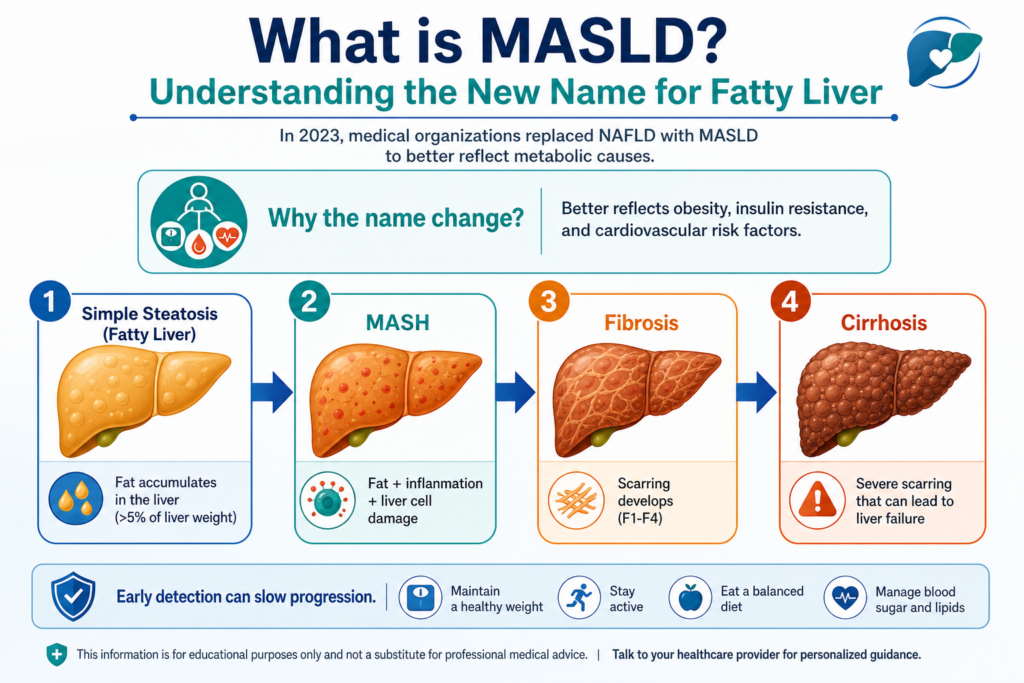
In 2023, major medical organizations changed the official name for fatty liver disease. It went from NAFLD (non-alcoholic fatty liver disease) to MASLD (metabolic dysfunction-associated steatotic liver disease).
Why the name change?
The new name better reflects what actually drives the condition. MASLD is linked to metabolic dysfunction — including obesity, insulin resistance, and cardiovascular risk factors. It’s not just about alcohol avoidance.
The Progression:
- Simple Steatosis (Fatty Liver): Fat accumulates in the liver (>5% of liver weight)
- MASH (Metabolic Dysfunction-Associated Steatohepatitis): Fat plus inflammation and liver cell damage
- Fibrosis: Scarring develops (stages F1-F4)
- Cirrhosis: Severe scarring that can lead to liver failure
Who’s at Risk?
You’re more likely to have MASLD if you have:
- Obesity or overweight (BMI ≥25)
- Type 2 diabetes
- High cholesterol or triglycerides
- High blood pressure
- Insulin resistance or metabolic syndrome
The scary part? MASLD is often silent. Most people have no symptoms until significant liver damage has occurred.
The Retatrutide Revolution: 86% Liver Fat Reduction
Retatrutide is not technically a GLP-1 medication… it’s even more powerful. It’s a triple hormone receptor agonist that activates GLP-1, GIP, and glucagon receptors simultaneously.
The Groundbreaking Results:
A Phase 2 clinical trial published in 2023 studied retatrutide specifically for fatty liver disease. The results shocked even the researchers:
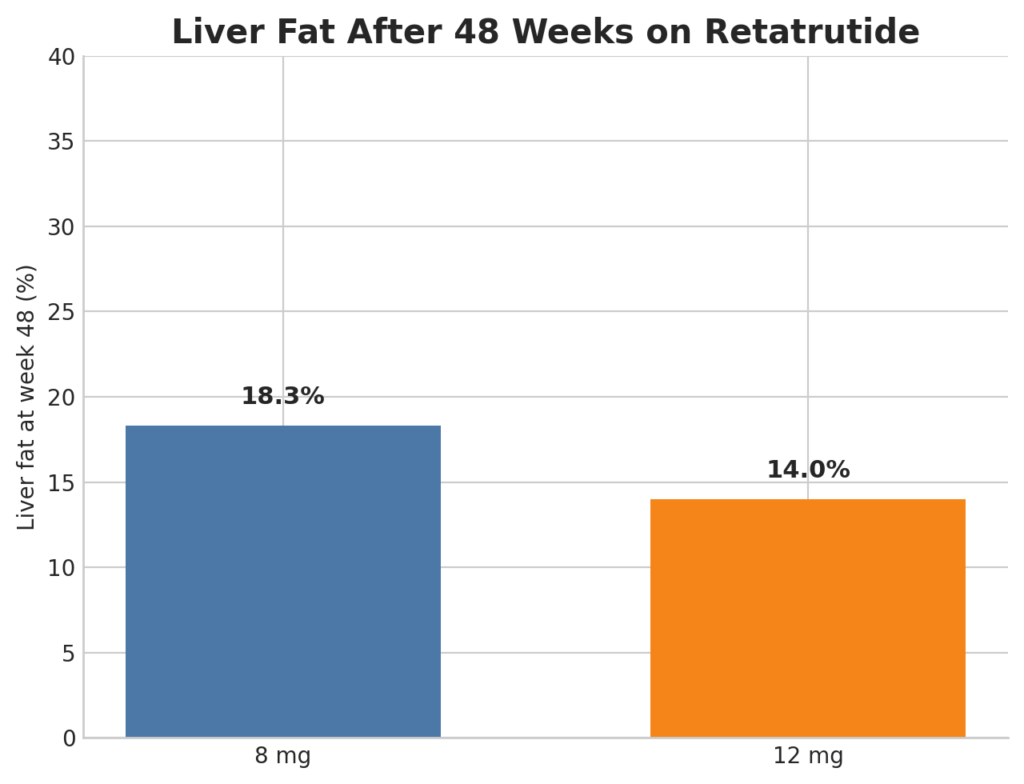
At 48 weeks:
- 81.7% reduction in liver fat with 8mg dose
- 86% reduction in liver fat with 12mg dose
- 89% of participants on 8mg had liver fat drop below 5% (no longer classified as fatty liver)
- 93% of participants on 12mg achieved resolution of fatty liver disease
Dr. Arun Sanyal led the study at Virginia Commonwealth University. He noted that over 85% of obese participants with fatty liver disease reduced liver fat to the point of no longer qualifying as having the disease.
Weight Loss Component:
While liver improvements were dramatic, retatrutide also produced significant weight loss:
- 22.8% body weight reduction with 8mg dose
- 24.2% body weight reduction with 12mg dose
What Makes Retatrutide Different?
By activating three hormone pathways instead of one or two, retatrutide appears to have more powerful effects on:
- Metabolism regulation
- Liver fat reduction
- Inflammation control
- Insulin sensitivity
A meta-analysis found that among all GLP-1-based therapies, retatrutide displayed the most obvious treatment effects on liver fat content.
Current Status:
Retatrutide is currently in Phase 3 trials and is not yet FDA-approved. Eli Lilly expects approval decisions in 2027-2028.
How GLP-1s Work on Liver Fat (Beyond Weight Loss)
Here’s what makes this story fascinating: GLP-1 medications don’t just help your liver by making you lose weight. They have direct effects on liver cells.
Recent research from 2026 revealed that semaglutide acts directly on the liver to reduce inflammation and scarring, independent of weight loss.
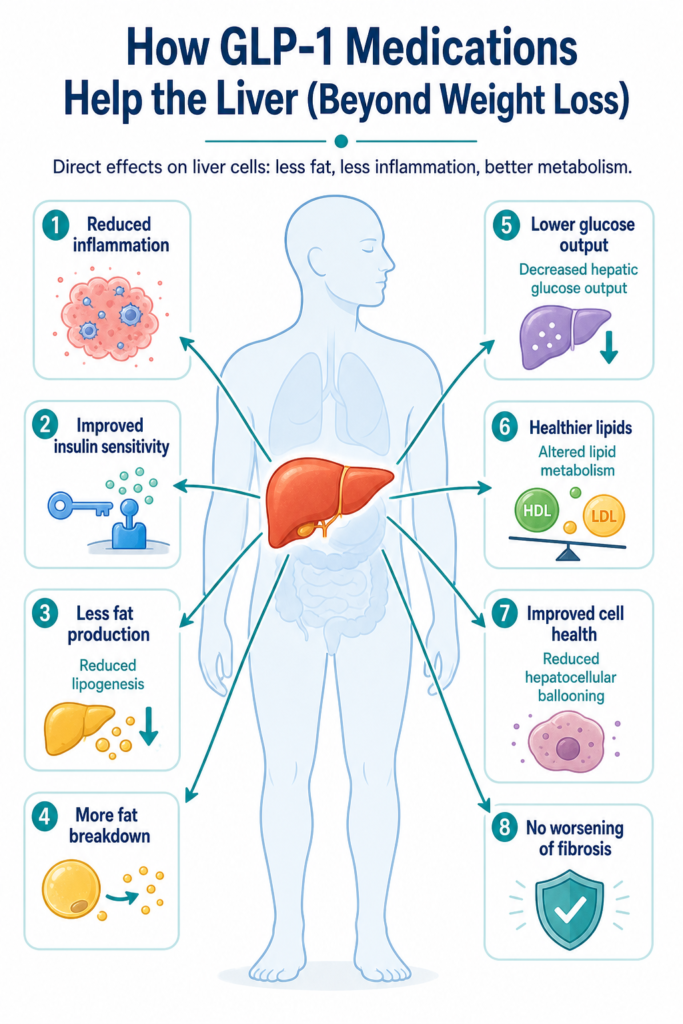
Multiple Mechanisms at Work:
1. Direct Anti-Inflammatory Effects
GLP-1 receptors exist in liver tissue. When activated, they reduce inflammatory cytokines and oxidative stress in liver cells.
2. Improved Insulin Sensitivity
Better insulin signaling means the liver stores less fat and processes glucose more efficiently.
3. Reduced Lipogenesis (Fat Production)
These medications decrease the liver’s production of new fat while increasing fat breakdown.
4. Decreased Hepatic Glucose Output
The liver produces less glucose, reducing metabolic stress.
5. Altered Lipid Metabolism
Improved triglyceride and cholesterol processing reduces fat accumulation.
6. Reduced Hepatocellular Ballooning
This is the swelling and damage to liver cells seen in MASH – GLP-1s specifically improve this.
7. No Worsening of Fibrosis
Critical finding: while improving steatosis and inflammation, GLP-1s don’t worsen liver scarring.
The Bottom Line:
Even if you don’t lose significant weight, you may still see substantial liver benefits from GLP-1 medications.
Semaglutide and Tirzepatide for MASLD: What the Data Shows
Both semaglutide (Ozempic/Wegovy) and tirzepatide (Zepbound/Mounjaro) have shown impressive results for fatty liver disease.
Semaglutide (Ozempic/Wegovy):
- Regulatory Approval: Health Canada approved semaglutide for MASH treatment in December 2025 for patients with moderate to advanced fibrosis (F2-F3)
- Liver Fat Reduction: Clinical trials show significant reductions in liver fat content
- Enzyme Improvements: Reduced ALT and AST levels (markers of liver inflammation)
- Direct Liver Action: Works on liver cells independent of weight loss
Tirzepatide (Zepbound/Mounjaro):
A 2025 study from Japan examined patients with type 2 diabetes and MASLD who switched from other GLP-1 medications to tirzepatide:
Results at 6 months:
- Significant reductions in fatty liver index
- Decreased FIB-4 index (marker of liver fibrosis)
- Improvements in body weight and HbA1c
- Reduced inflammatory markers
The study concluded that switching to tirzepatide showed efficacy in suppressing MASLD progression.
Safety Profile:
A comprehensive analysis found that GLP-1 receptor agonists are not contraindicated in fatty liver disease and require no dose adjustments for hepatic impairment.
In fact, current evidence suggests these medications are not only safe but may offer specific hepatic benefits beyond weight loss alone.
Meta-Analysis Findings:
A 2025 meta-analysis of 25 randomized controlled trials involving 2,600 patients found:
- Overall liver fat reduction: 5.21% decrease
- Improvements in:
- Histological steatosis (fat accumulation)
- Hepatocellular ballooning (cell damage)
- Lobular inflammation
- No worsening of fibrosis
Resmetirom (Rezdiffra): The First FDA-Approved MASH Drug
While GLP-1s are being repurposed for liver disease, resmetirom (Rezdiffra) was specifically designed to treat MASH.
Mechanism of Action:
Resmetirom is a thyroid hormone receptor-beta agonist. Unlike GLP-1s, it selectively targets thyroid receptors in the liver. This directly improves fat metabolism without systemic hormonal effects.
FDA Approval:
- March 14, 2024: FDA granted accelerated approval for adults with non-cirrhotic MASH and moderate to advanced liver fibrosis (F2-F3)
- First drug ever approved specifically for MASH-related liver scarring
- Granted Breakthrough Therapy, Fast Track, and Priority Review designations
The MAESTRO-NASH Trial:
The approval was based on a study of 917 adults with MASH and moderate or advanced liver fibrosis.
Results at 52 weeks:
MASH Resolution (without worsening fibrosis):
- Resmetirom 80 mg: 26%
- Resmetirom 100 mg: 30%
- Placebo: 10%
Fibrosis Improvement (without worsening MASH):
- Resmetirom 80 mg: 24%
- Resmetirom 100 mg: 26%
- Placebo: 14%
Dosing:
- Most patients: 80mg once daily
- Higher body weight patients: 100mg once daily
- Taken orally with diet and exercise
Important Notes:
- Resmetirom is approved under accelerated approval, meaning ongoing studies must confirm long-term clinical benefit
- The MAESTRO-NASH-OUTCOMES trial (expected completion 2026) is studying whether resmetirom prevents liver-related complications like cirrhosis and liver transplant
- UK and EU approvals followed in 2025-2026
Who Should Use Resmetirom?
VA (Veterans Affairs) criteria for use includes:
- Documented non-cirrhotic MASH with F2-F3 fibrosis
- NAFLD activity score ≥4 on liver biopsy within past 36 months
- Prescribed by gastroenterologist/hepatologist
- If overweight/obese: must have tried or be intolerant to GLP-1 receptor agonist first
This last point is significant—it suggests GLP-1s may be considered first-line treatment before resmetirom.
Other Promising Drugs: Survodutide and Efinopegdutide
Beyond the medications we’ve discussed, two other dual-agonist drugs are showing impressive results:
Efinopegdutide (GLP-1/Glucagon Dual Agonist):
A Phase 2a trial compared efinopegdutide directly to semaglutide:
Results:
- Efinopegdutide 10mg weekly led to significantly greater reduction in liver fat than semaglutide 1mg weekly
- Works by activating both GLP-1 and glucagon receptors
- Reduces liver fat through multiple pathways: reduced caloric intake, increased energy expenditure, enhanced fat breakdown
Survodutide (GLP-1/Glucagon Dual Agonist):
Boehringer Ingelheim is developing survodutide for MASH:
Phase 2 Trial Results:
- Significant decrease in liver fat content (≥30% reduction)
- Improvements in MASH resolution
- Currently in Phase 3 trials
How These Differ from Standard GLP-1s:
By adding glucagon receptor activation, these dual agonists:
- Increase energy expenditure
- Enhance fat oxidation in the liver
- May provide greater liver fat reduction than GLP-1 alone
The SYNERGY-OUTCOMES Trial: What’s Coming Next
The most important liver outcomes trial ever conducted is underway right now.
Study Design:
- Name: SYNERGY-OUTCOMES Master Protocol
- Enrollment: ~4,500 adults with high-risk MASLD
- Duration: 224 weeks (over 4 years)
- Arms: Retatrutide vs. Tirzepatide vs. Placebo
- Primary Outcome: Prevention of major adverse liver outcomes (MALO)
Who’s Eligible:
- ELF score 9-10.8 (blood test for liver fibrosis)
- Liver stiffness measurement 10-20 kPa
- Liver fat content ≥8%
- BMI ≥25
What They’re Measuring:
Major adverse liver outcomes include:
- Progression to cirrhosis
- Liver transplant
- Liver-related death
- Development of liver cancer
- Hepatic decompensation events
Why This Matters:
This is the first trial designed to prove these medications can prevent the worst outcomes of fatty liver disease—not just improve surrogate markers like fat percentage or inflammation.
Expected Completion: 2030-2031
Optional Extension:
After the main study, participants can enter a 2-year extension where everyone (including those on placebo) receives either retatrutide or tirzepatide.
Who Should Consider These Medications for Fatty Liver
Based on current evidence and approvals, here’s who might benefit:
Strong Candidates for GLP-1s (Semaglutide/Tirzepatide):
✓ MASLD or MASH with obesity or overweight (BMI ≥25)
✓ Type 2 diabetes with fatty liver disease
✓ Elevated liver enzymes (ALT, AST)
✓ Metabolic syndrome with fatty liver
✓ Early-stage fibrosis (F0-F1)
✓ Those who want one medication for weight loss AND liver health
Candidates for Resmetirom (Rezdiffra):
✓ Biopsy-confirmed MASH with F2-F3 fibrosis
✓ NAFLD activity score ≥4
✓ Unable to tolerate or inadequate response to GLP-1s
✓ Not significantly overweight (resmetirom works independent of weight loss)
✓ More advanced liver disease requiring targeted therapy
Future Candidates for Retatrutide:
✓ MASLD with obesity
✓ Those needing maximal liver fat reduction
✓ Patients seeking the most powerful metabolic effects
✓ (Once FDA-approved, likely 2027-2028)
Who Should NOT Use These:
✗ Active cirrhosis (decompensated liver disease)
✗ Other causes of liver disease (hepatitis B/C, alcoholic liver disease, autoimmune hepatitis)
✗ Personal or family history of medullary thyroid cancer (GLP-1s)
✗ History of pancreatitis (use with caution)
✗ Pregnancy or planning pregnancy
Comparing Your Options: Which Drug is Right for You?
| Medication | Type | Liver Fat Reduction | FDA Status | Cost | Best For |
| Retatrutide | Triple agonist (GLP-1/GIP/Glucagon) | 81-86% | Phase 3 trials | Not available yet | Maximal liver fat reduction + weight loss |
| Semaglutide (Wegovy/Ozempic) | GLP-1 agonist | Significant | Approved for MASH (Canada) | $900-1,300/mo brand; $199-299/mo compounded | MASLD + weight management + cardiovascular benefits |
| Tirzepatide (Zepbound/Mounjaro) | Dual agonist (GLP-1/GIP) | Significant | Off-label for MASLD | $900-1,100/mo brand; $249-399/mo compounded | MASLD + diabetes + weight loss |
| Resmetirom (Rezdiffra) | Thyroid receptor-beta agonist | 26-30% MASH resolution | FDA approved for MASH F2-F3 | ~$4,000/mo (before insurance) | Advanced MASH with fibrosis, targeted liver therapy |
| Efinopegdutide | Dual agonist (GLP-1/Glucagon) | Greater than semaglutide | Phase 2 trials | Not available yet | Potentially superior liver fat reduction |
| Survodutide | Dual agonist (GLP-1/Glucagon) | ≥30% reduction | Phase 3 trials | Not available yet | MASH with significant liver involvement |
Treatment Algorithm:
Stage 1 – Simple Steatosis or Early MASH:
→ Start with lifestyle modifications + GLP-1 agonist (semaglutide or tirzepatide)
Stage 2 – MASH with F2-F3 Fibrosis:
→ GLP-1 agonist first-line
→ If inadequate response or intolerance → Resmetirom
Stage 3 – High-Risk MASLD:
→ Consider enrollment in SYNERGY-OUTCOMES or other clinical trials
→ Aggressive management with specialist oversight
How Fast Do Liver Improvements Happen?
Good news: you don’t have to wait years to see liver benefits.
Typical Timeline:
Weeks 1-4:
- Liver enzyme improvements (ALT, AST) often begin
- Early metabolic changes
Weeks 12-24:
- Measurable reductions in liver fat on imaging
- Continued enzyme normalization
- Weight loss contributing to liver improvement
Week 48 (1 year):
- Maximal liver fat reduction typically achieved
- Retatrutide: 81-86% liver fat reduction
- Inflammation and ballooning improvements visible on biopsy
Beyond 1 Year:
- Potential fibrosis regression (improvement in scarring)
- Sustained benefits with continued treatment
Important: Liver improvements require ongoing treatment. Stopping medication typically leads to gradual return of liver fat.
Can You Reverse Liver Damage with GLP-1s?
This is the million-dollar question.
What Can Be Reversed:
✓ Steatosis (Fat Accumulation): YES – can be completely reversed
- Retatrutide achieved resolution in 89-93% of participants
✓ Inflammation: YES – consistently improves
- MASH resolution rates of 26-30% with resmetirom
✓ Hepatocellular Ballooning: YES – improves with GLP-1 therapy
✓ Early Fibrosis (F1-F2): POSSIBLY – some evidence of regression
- Resmetirom showed 24-26% fibrosis improvement
- GLP-1s show no worsening and potential improvement
What’s Harder to Reverse:
⚠ Advanced Fibrosis (F3): May stabilize or slowly improve
- Requires longer treatment duration
- Benefits seen but slower
⚠ Cirrhosis (F4): Limited reversal potential
- Focus shifts to preventing decompensation
- Some improvement possible but structural damage harder to reverse
The Research:
A 2025 study found that GLP-1 agonists improved histological steatosis, hepatocellular ballooning, and lobular inflammation without worsening of fibrosis.
Recent 2026 research showed semaglutide reduces liver inflammation and scarring directly, independent of weight loss effects.
Critical Factor: Early Intervention
The earlier you start treatment, the more reversible the damage. Once cirrhosis develops, options become more limited.
Accessing GLP-1s for Fatty Liver Treatment
Getting prescribed these medications for fatty liver depends on your specific situation and location.
Traditional Medical Route:
1. Get Properly Diagnosed
- Blood tests (liver enzymes, metabolic panel)
- Imaging (ultrasound, FibroScan, MRI-PDFF)
- Possibly liver biopsy for MASH confirmation
- Fibrosis staging (ELF score, FibroScan, FIB-4 index)
2. See a Specialist
- Hepatologist (liver specialist)
- Gastroenterologist
- Endocrinologist (if diabetic)
3. Insurance Coverage
- Resmetirom: May be covered for approved MASH indication with prior authorization
- Semaglutide/Tirzepatide: Coverage for MASLD varies
- Better coverage if you have diabetes or obesity
- Off-label use for MASLD alone may not be covered
4. Cost Considerations
- Brand-name GLP-1s: $900-1,300/month
- Resmetirom: ~$4,000/month (before insurance)
- Many insurances require step therapy (try lifestyle changes first)
Telehealth Compounded GLP-1 Options:
If brand-name medications are cost-prohibitive, several telehealth providers offer compounded semaglutide and tirzepatide for patients with fatty liver and metabolic conditions:
SkinnyRx
- Compounded semaglutide: $199/month
- Compounded tirzepatide: $299/month
- Online consultation with licensed providers
- May prescribe for metabolic health including fatty liver
- Includes ongoing monitoring
MEDVi
- Comprehensive metabolic health program
- Compounded GLP-1 options: $249-399/month
- Focus on liver health and metabolic optimization
- Licensed providers in all 50 states
- Regular check-ins and lab monitoring
Enhance.MD
- Premium service with nutritionist support
- Compounded semaglutide: $299/month
- Personalized metabolic assessment
- Lifestyle coaching for liver health
Yucca Health
- Flexible dosing options
- Starting at $146/month for 6 month semaglutide plan
- Easy online process
- Fast nationwide shipping
Important Considerations:
- Compounded medications are not FDA-approved but are made by licensed U.S. pharmacies
- Still require prescription from licensed healthcare provider
- More affordable option for those without insurance coverage
- Should still have proper liver diagnosis and monitoring
Monitoring While on Treatment
Regardless of how you access medication, you need:
- Baseline liver tests (enzymes, imaging, fibrosis assessment)
- Follow-up labs every 3-6 months
- Repeat imaging at 6-12 months
- Ongoing metabolic monitoring (HbA1c, lipids, weight)
Frequently Asked Questions
Can I take GLP-1s if I have fatty liver disease?
Yes. GLP-1 receptor agonists are not contraindicated in fatty liver disease and require no dose adjustments. In fact, they may specifically benefit liver health.
Do I need a liver biopsy to get treated?
Not always. For GLP-1 therapy in the context of obesity or diabetes, you don’t typically need a biopsy. However, for resmetirom (Rezdiffra) or clinical trials, biopsy confirmation of MASH and fibrosis stage is usually required.
How long do I need to take these medications?
Likely long-term or indefinitely. When treatment stops, liver fat and inflammation tend to return gradually. Think of it like blood pressure medication—it works while you’re taking it.
Will my liver enzymes go back to normal?
Many patients see significant improvements or normalization of ALT and AST levels. However, enzyme levels alone don’t tell the whole story—imaging and fibrosis assessment are also important.
Can these medications prevent me from needing a liver transplant?
The SYNERGY-OUTCOMES trial is specifically studying whether retatrutide and tirzepatide can prevent major adverse liver outcomes including transplant. Early data is promising, but definitive answers will come when the trial completes around 2030-2031.
What about side effects?
GLP-1 side effects (nausea, vomiting, diarrhea) are generally temporary and improve over time. Resmetirom can cause diarrhea and elevated LDL cholesterol. Your doctor will monitor for rare serious side effects like pancreatitis.
Can I drink alcohol while taking these medications?
If you have MASLD, you should minimize or avoid alcohol entirely, as it can worsen liver damage regardless of medication use.
Will insurance cover GLP-1s for fatty liver?
Coverage varies widely. You have better chances if you also have type 2 diabetes or obesity meeting BMI criteria. Some insurers may cover off-label use with proper documentation from a specialist.
Key Takeaways
✓ Retatrutide shows the most dramatic liver fat reduction: 81-86% decrease with 89-93% resolution of fatty liver disease
✓ Semaglutide approved for MASH treatment in Canada (December 2025) with direct liver-protective effects
✓ Tirzepatide shows significant benefits for fatty liver with improvements in liver enzymes and fibrosis markers
✓ Resmetirom (Rezdiffra) is the first FDA-approved drug specifically for MASH with fibrosis (March 2024)
✓ Mechanisms go beyond weight loss: GLP-1s act directly on liver cells to reduce inflammation and fat
✓ No worsening of fibrosis: GLP-1 therapies improve steatosis and inflammation without increasing scarring
✓ Results visible within 6-12 months: Significant liver fat reduction typically achieved by 48 weeks
✓ Early intervention is key: The earlier you start treatment, the more reversible the liver damage
✓ SYNERGY-OUTCOMES trial will definitively answer whether these drugs prevent liver transplant and death (results expected 2030-2031)
✓ Multiple options available: From standard GLP-1s to triple-agonists to thyroid-targeting drugs, treatment options are expanding rapidly
Your Next Steps
If you have or suspect fatty liver disease:
Step 1: Get Properly Diagnosed
- Schedule appointment with primary care doctor or gastroenterologist
- Request liver enzyme tests (ALT, AST)
- Consider non-invasive fibrosis assessment (FibroScan, ELF score, FIB-4 index)
- Discuss imaging options (ultrasound, MRI-PDFF)
Step 2: Assess Your Treatment Options
Traditional Route:
- Consult hepatologist or gastroenterologist
- Discuss GLP-1 therapy or resmetirom based on your fibrosis stage
- Explore insurance coverage options
Affordable Telehealth Route:
Step 3: Consider Clinical Trials
If you have high-risk MASLD, you may qualify for the SYNERGY-OUTCOMES trial or other studies offering free medication and comprehensive monitoring.
Compare Your Compounded Telehealth GLP-1 Options:
- SkinnyRx – Budget-friendly and highly rated with compounded options starting at $199/month
- MEDVi – Comprehensive metabolic health program with liver focus
- Enhance.MD – Premium service with nutritionist and lifestyle support
- Yucca Health – Flexible dosing and 2 day shipping
- Direct Meds – $200 OFF coupon and oral options available
Step 4: Read These Related and Supporting Articles
- How GLP-1 Medications Work: Mechanisms, Timeline, and What to Expect [2026]
- GLP-1 Side Effects: What’s Normal, What’s Manageable, and When to Worry [2026]
- What Should I Eat While Taking GLP-1 Medications? Complete Diet Plan for Semaglutide and Tirzepatide
- Which Is Better: Semaglutide or Tirzepatide for Weight Loss?
- GLP-1 and Addiction: Can Ozempic, Wegovy, or Mounjaro Help Fight Alcoholism and Drug Use?
- GLP-1 Hair Loss: Can Ozempic, Wegovy, or Zepbound Cause Hair Shedding?
- GLP-1s and Heart Health: Can Ozempic, Wegovy, and Zepbound Really Cut Heart Attack and Stroke Risk?
And Check Out These GLP-1 Telehealth Program Reviews
- Skinny Rx Review: Is This the Best Low-Cost Semaglutide and Tirzepatide Program in 2026?
- MEDVi Reviews 2026: Cost, Complaints, Is MEDVi Legit or a Scam?
- Enhance.MD Review 2026: Is the Flat-Rate GLP-1 Program Worth It?
- DirectMeds Review 2026: Needle-Free GLP-1 Options + No Hidden Fees
- Yucca Health Review 2026: Affordable GLP-1 with Multi-Month Savings + Free Expedited Shipping
Sources
- Nature Medicine – Triple Hormone Receptor Agonist Retatrutide for Metabolic Dysfunction
- ClinicalTrials.gov – SYNERGY-OUTCOMES Master Protocol for MASLD
- VCU Health – Retatrutide Wiped Out Fat in Liver of Obese Patients
- Oxford Academic Gastroenterology – Advancements in Pharmacological Treatment of NAFLD/MASLD
- WithPower – Tirzepatide + Retatrutide for Fatty Liver Disease Clinical Trial
- PubMed – Efficacy of GLP-1-Based Therapies on Metabolic Dysfunction-Associated Steatotic Liver Disease
- PMC – Effects of Tirzepatide on Patients With Type 2 Diabetes and MASLD
- Journal of Clinical and Translational Hepatology – Pipeline of New Drug Treatment for MASLD
- WebMD – Could Semaglutide Treat Fatty Liver Disease?
- Fella Health – Can You Take Weight Loss Injections With Fatty Liver
- UC Health – SYNERGY-OUTCOMES Liver Disease Clinical Trial
- AASLD – Why Are GLP-1 Agonists Being Used to Treat Patients with NAFLD
- Michigan Medicine – How Do GLP-1 Weight Loss Drugs Affect the Liver?
- TrialX – Effect of Tirzepatide on Markers of MASLD in Patients With Obesity
- Nature Scientific Reports – GLP-1 Receptor Agonists Improve Cardiovascular Outcomes in MASLD
- UK Government – Resmetirom (Rezdiffra) Authorised to Treat MASH
- FDA – FDA Approves First Treatment for Patients with Liver Scarring Due to Fatty Liver Disease
- PMC – Resmetirom for MASH: A Comprehensive Review
- European Medicines Agency – Rezdiffra EPAR
- YouTube – FDA Approval of REZDIFFRA (resmetirom) for NASH/MASH Treatment
- NATAP – Efinopegdutide Cuts Liver Fat More Than Semaglutide
- Liver.ca – The Impact of GLP-1s on Your Liver Health
- FirstWord Pharma – Madrigal’s Rezdiffra Clinches First FDA Approval for MASH
- PubMed – Efinopegdutide vs Semaglutide Active-Comparator Study in NAFLD
- PMC – Therapeutic Mechanisms and Clinical Effects of GLP-1 Receptor Agonists in NAFLD
- VA Pharmacy Benefits – Resmetirom (REZDIFFRA) in MASH Criteria for Use
- New England Journal of Medicine – Survodutide Phase 2 Trial in MASH
- Sinai Health – GLP-1 Medicine Improves Liver Health Independent of Weight Loss
- Exploration – FDA’s Approval of Resmetirom: A Breakthrough in MASH Treatment
- Boehringer Ingelheim – Survodutide Press Release
Medical Disclaimer
This article is for informational purposes only and does not constitute medical advice. MASLD and MASH are serious medical conditions that require professional medical evaluation and treatment by qualified healthcare providers, preferably hepatologists or gastroenterologists. GLP-1 medications (semaglutide, tirzepatide, retatrutide) and other treatments discussed are prescription medications that may not be suitable for everyone. Liver disease can progress to cirrhosis, liver failure, and liver cancer if left untreated, and should be managed under medical supervision. Always consult with a qualified healthcare provider before starting any new medication or treatment for liver disease. Diagnosis of fatty liver disease and fibrosis staging should be done through proper medical testing including blood work, imaging, and potentially liver biopsy. The information presented here is based on clinical trials and published research but should not replace individualized medical advice. Side effects of these medications may include nausea, vomiting, diarrhea, pancreatitis, gallbladder problems, and other serious complications. Regular monitoring of liver function and overall health is essential when using these medications. This information has not been evaluated by the FDA for the purpose of diagnosing, treating, curing, or preventing liver disease.
Affiliate Disclaimer
This article contains affiliate links to telehealth GLP-1 providers. If you click through and purchase a service or medication through these links, we may receive a commission at no additional cost to you. These commissions help support our ability to provide free, comprehensive, evidence-based reviews and health information about liver disease and metabolic health. Our editorial content and recommendations are independent and based on thorough research of clinical trials, FDA approvals, regulatory decisions, patient reviews, and expert medical guidance. We only recommend services and providers we believe offer genuine value, safety, and quality care to our readers. The decision to use any telehealth service or medication for fatty liver disease should be made in consultation with your healthcare provider, preferably a hepatologist or gastroenterologist, based on your individual medical needs, liver disease stage, and overall health profile. Compounded medications mentioned are not FDA-approved but are prepared by licensed U.S. pharmacies and prescribed by licensed healthcare providers. They offer a more affordable alternative to brand-name medications for those without insurance coverage, but proper medical diagnosis and monitoring remain essential.
Updated: July 2026