
Quick Answer:
Yes. GLP-1 medications like Ozempic, Wegovy, and Zepbound have been proven to reduce cardiovascular risk. The landmark SELECT trial showed semaglutide cut major cardiovascular events by 20% in people with obesity and heart disease. These heart-protective effects begin within just 3–6 months of treatment. They also work through mechanisms beyond weight loss alone.
If you want to get started with GLP-1s right away, SkinnyRx offers several affordable compounded options that can be accessed through a telehealth provider:
GLP-1 medications are best known for weight loss. But their cardiovascular benefits may be even more significant. Clinical trials now show these drugs can meaningfully reduce the risk of heart attacks, strokes, and cardiovascular death — even in patients who don’t lose much weight.
You’ve probably heard about dramatic weight loss results from Ozempic and Wegovy. But here’s what most people miss: these medications are also fundamentally changing how doctors approach heart disease prevention.
In 2024, the FDA approved Wegovy specifically to reduce cardiovascular risk in people with heart disease. This was a landmark decision — Wegovy became the first weight-loss drug ever granted this indication.
So what’s really going on here? Can a weekly injection actually protect your heart? And if so, how does it work?
In This Article
- What the Research Actually Shows
- The Landmark SELECT Trial: Game-Changing Results
- How GLP-1s Protect Your Heart (Beyond Weight Loss)
- Ozempic vs Wegovy vs Zepbound: Cardiovascular Benefits Compared
- Who Benefits Most from GLP-1s for Heart Health
- How Fast Do the Heart Benefits Start?
- The Stroke Connection: Impressive Risk Reductions
- Real-World Evidence: What Patients Are Experiencing
- Should You Consider GLP-1s for Heart Health?
- How to Access GLP-1s for Cardiovascular Protection
- Frequently Asked Questions
- Key Takeaways
- Your Next Steps
What the Research Actually Shows
Over the past several years, multiple large cardiovascular outcome trials have tested GLP-1 medications in thousands of patients with heart disease and diabetes. The results have been consistently impressive.
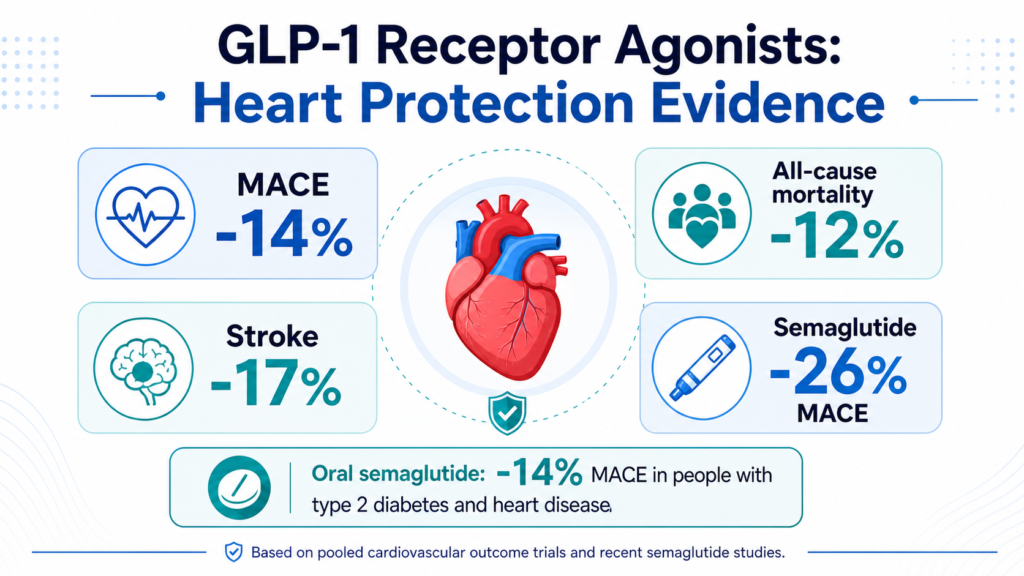
A meta-analysis pooling data from over 60,000 patients found that GLP-1 receptor agonists reduced:
- Major adverse cardiovascular events (MACE) by 14%
- All-cause mortality by 12%
- Stroke risk by 17%
- Heart attacks by varying degrees depending on the specific medication
But here’s what makes the research truly revolutionary: the strongest benefits were seen with semaglutide (the active ingredient in Ozempic and Wegovy), which showed a 26% reduction in major cardiovascular events.
Even more recent studies have shown that oral semaglutide reduced cardiovascular events by 14% in people with type 2 diabetes and existing heart disease.
The Landmark SELECT Trial: Game-Changing Results
The SELECT trial is arguably the most important cardiovascular study ever conducted on a weight-loss drug. Its full name: Semaglutide Effects on Heart Disease and Stroke in Patients with Overweight or Obesity.
Here’s why it matters:
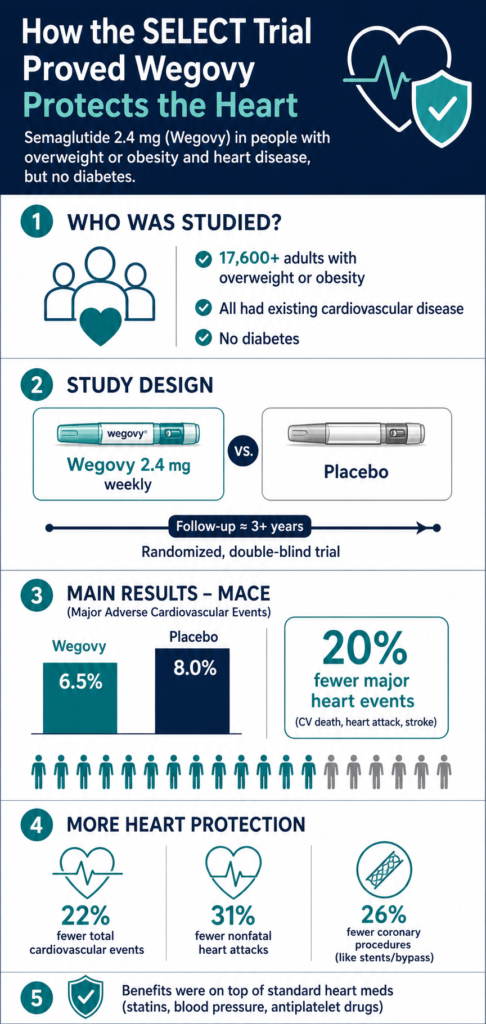
Most previous GLP-1 studies focused on people with diabetes. SELECT was different. It studied people with obesity or overweight who had existing cardiovascular disease but no diabetes. This proved the heart benefits weren’t just about blood sugar control.
The Results:
The trial enrolled over 17,600 participants. They were randomized to receive either Wegovy (semaglutide 2.4mg) or a placebo. The average follow-up period was 40 months — just over 3 years.
The primary outcome—major adverse cardiovascular events including cardiovascular death, nonfatal heart attack, and nonfatal stroke—occurred in:
- 6.5% of people taking Wegovy
- 8.0% of people taking placebo
That translates to a 20% reduction in risk.
Breaking it down further, a 2025 sub-analysis showed that semaglutide:
- Reduced total cardiovascular events by 22%
- Reduced nonfatal heart attacks by 31%
- Reduced coronary revascularizations (procedures like stents and bypasses) by 26%
What makes this even more impressive? These patients were already on standard heart medications like statins, blood pressure drugs, and antiplatelet therapy. Adding semaglutide on top of those proven treatments provided an additional 10-20% risk reduction.
How GLP-1s Protect Your Heart (Beyond Weight Loss)
This is where it gets interesting. Weight loss certainly helps the heart. But researchers have found that GLP-1 medications protect the cardiovascular system through several independent mechanisms — beyond just losing pounds.
The cardiovascular benefits happen through:
1. Direct Anti-Inflammatory Effects
GLP-1 receptors are found throughout the cardiovascular system. When activated, they reduce inflammation in blood vessels and stabilize atherosclerotic plaques, making them less likely to rupture and cause heart attacks.
2. Improved Endothelial Function
These medications improve the function of the inner lining of blood vessels (the endothelium), which helps regulate blood pressure and prevents clot formation.
3. Blood Pressure Reduction
GLP-1s consistently lower systolic blood pressure by 3-5 mmHg, which contributes to reduced cardiovascular risk.
4. Metabolic Improvements
Better insulin sensitivity, improved lipid profiles, and reduced liver fat all contribute to heart health.
5. Reduced Oxidative Stress
GLP-1 medications decrease harmful oxidative stress in the cardiovascular system.
6. Slowing Atherosclerosis Progression
Studies suggest these medications slow the buildup and progression of arterial plaque.
The key takeaway? Even if you don’t lose a significant amount of weight, you may still get cardiovascular protection from GLP-1 medications.
Ozempic vs Wegovy vs Zepbound: Cardiovascular Benefits Compared
All three medications have shown cardiovascular benefits, but the data varies:
Semaglutide (Ozempic/Wegovy):
- SUSTAIN-6 trial: 26% reduction in MACE, primarily driven by 39% reduction in stroke
- SELECT trial: 20% reduction in MACE in people without diabetes
- FDA approved for cardiovascular risk reduction in people with obesity and heart disease
- Benefits seen with both injectable and oral formulations
Tirzepatide (Zepbound/Mounjaro):
- Real-world studies: Comparable cardiovascular benefits to semaglutide
- Some studies suggest tirzepatide may have slightly better outcomes for heart failure hospitalization
- One comparison found tirzepatide had lower risks of myocardial infarction and heart failure events than semaglutide
- Major outcomes trial (SUMMIT) showed improvements in heart failure with preserved ejection fraction
Head-to-Head:
A large real-world comparison found that tirzepatide and semaglutide showed comparable cardiovascular benefit, with a hazard ratio of 1.06 (essentially equivalent).
Bottom Line:
Both medications provide significant cardiovascular protection. Semaglutide has more published clinical trial data and FDA approval specifically for cardiovascular risk reduction, while tirzepatide shows promising comparable benefits in real-world studies.
Who Benefits Most from GLP-1s for Heart Health
Based on the clinical trials and real-world evidence, GLP-1 medications provide the most cardiovascular benefit for:
Primary Candidates:
- People with obesity or overweight (BMI ≥27) AND existing cardiovascular disease
- Those with type 2 diabetes and high cardiovascular risk
- Patients who’ve previously had a heart attack or stroke
- People with peripheral artery disease
- Those with multiple cardiovascular risk factors (high blood pressure, high cholesterol, smoking history)
Emerging Evidence For:
- Heart failure with preserved ejection fraction (HFpEF)
- Chronic kidney disease with cardiovascular risk
- People with obesity without diabetes but with cardiovascular disease
Important Note:
Research shows cardiovascular benefits are most pronounced in people with BMI ≥25. Those with lower BMIs still see kidney benefits. But the cardiovascular risk reduction may be less significant.
How Fast Do the Heart Benefits Start?
You don’t have to wait years to see cardiovascular protection. A 2025 analysis of the SELECT trial found remarkably early benefits:
- Within 3 months: 38% reduced risk of major cardiovascular events compared to placebo
- Within 6 months: 41% reduced risk of major cardiovascular events
This means that within just a few months of starting treatment, people were experiencing significantly fewer heart attacks and strokes.
The benefits continued to increase over time, with the treatment curves separating further at 1.5 years and remaining divergent throughout the study.
The Stroke Connection: Impressive Risk Reductions
One of the most compelling findings in GLP-1 cardiovascular research is the dramatic reduction in stroke risk.
The Data on Strokes:
- Ozempic reduced stroke rate by 39% in people with type 2 diabetes and heart disease
- A meta-analysis found GLP-1 medications reduced stroke risk by 17% overall
- Semaglutide particularly prevented small-vessel occlusion strokes
- The stroke benefit appeared regardless of whether patients had a prior stroke at baseline
Why This Matters:
Stroke is the fifth leading cause of death in the United States and a major cause of long-term disability. A medication that can reduce stroke risk by nearly 40% while also helping with weight management represents a significant advancement in preventive cardiology.
Real-World Evidence: What Patients Are Experiencing
Clinical trials are controlled environments. What happens when these medications are used in everyday practice?
Real-world studies have confirmed the cardiovascular benefits extend beyond trial settings:
- Large database studies show consistent reductions in heart attacks and strokes
- Patients on GLP-1s have lower rates of cardiovascular hospitalizations
- The benefits appear across different age groups and genders
- Even patients with Type 1 diabetes (an off-label use) showed lower cardiovascular risk when using GLP-1s
Patient Experiences:
Many patients report not just weight loss, but improvements in blood pressure, blood sugar control, and overall energy levels—all factors that contribute to cardiovascular health.
Should You Consider GLP-1s for Heart Health?
The American College of Cardiology released guidelines in 2025 recommending that providers consider GLP-1s as a first-line treatment option for weight management in patients with obesity to reduce cardiovascular risk.
You might be a good candidate if you:
✓ Have obesity or overweight (BMI ≥27) with cardiovascular disease
✓ Have had a previous heart attack, stroke, or cardiovascular event
✓ Have type 2 diabetes with high cardiovascular risk
✓ Have multiple risk factors despite being on standard heart medications
✓ Have struggled with weight management using lifestyle changes alone
You should discuss with your doctor if:
- You have a history of pancreatitis
- You have a personal or family history of medullary thyroid cancer
- You have severe gastrointestinal disease
- You’re pregnant or planning pregnancy
Important Considerations:
GLP-1 medications are not a replacement for other cardiovascular treatments. They work best when combined with:
- Heart-healthy diet
- Regular physical activity
- Blood pressure medications (if needed)
- Cholesterol-lowering drugs (if needed)
- Smoking cessation
How to Access GLP-1s for Cardiovascular Protection
Getting prescribed GLP-1 medications for cardiovascular health depends on several factors:
Traditional Route:
- See your doctor (cardiologist, endocrinologist, or primary care)
- Discuss your cardiovascular risk and whether you meet FDA criteria
- Navigate insurance coverage (coverage varies; Wegovy has cardiovascular indication, which may help)
- Pay out-of-pocket if not covered (brand-name versions can cost $900-1,300/month)
Telehealth Compounded Options:
If brand-name medications are too expensive or not covered by insurance, several telehealth providers offer compounded semaglutide and tirzepatide:
SkinnyRx
- Compounded semaglutide: Starting at $199/month
- Compounded tirzepatide: Starting at $299/month
- Includes doctor consultation and ongoing support
- Medication shipped directly to you
- Comprehensive cardiovascular-focused program
- Compounded GLP-1 options: $249-$399/month
- Includes monitoring and lifestyle coaching
- Licensed providers in all 50 states
Enhance.MD
- Premium concierge service with nutritionist support
- Compounded semaglutide: $299/month
- Personalized cardiovascular risk assessment
- Regular check-ins with medical team
Direct Meds
- Flexible dosing options
- Starting at $179/month for compounded formulations
- Easy online consultation process
- Fast shipping nationwide
Important Note:
Compounded medications are not FDA-approved like brand-name Ozempic, Wegovy, or Zepbound. However, they’re made by licensed U.S. pharmacies using the same active ingredients and prescribed by licensed healthcare providers. They offer a more affordable option for those without insurance coverage.
Frequently Asked Questions
Do GLP-1s prevent heart attacks if you don’t have heart disease?
The SELECT trial specifically studied people with existing cardiovascular disease. While we know GLP-1s improve cardiovascular risk factors like blood pressure and weight in healthy people, large-scale trials showing prevention in those without existing disease are limited.
How long do you need to take GLP-1s to get heart benefits?
Benefits start appearing within 3-6 months, but the medications work best with long-term use. The SELECT trial followed patients for over 3 years.
Will insurance cover GLP-1s for heart health?
Coverage varies. Wegovy has FDA approval for cardiovascular risk reduction, which may improve insurance coverage for those who qualify. Many insurance plans still require prior authorization or don’t cover these medications, making telehealth compounded options attractive.
Can you take GLP-1s if you’re already on heart medications?
Yes. In the SELECT trial, nearly all participants were already on standard cardiovascular medications. GLP-1s provided additional benefit on top of those treatments.
What about side effects?
Common side effects include nausea, vomiting, diarrhea, and constipation. These usually improve over time. Serious side effects are rare but can include pancreatitis and gallbladder problems. Your doctor will monitor you closely.
Do the cardiovascular benefits last after stopping the medication?
Research suggests the benefits are maintained while taking the medication. Some benefit may persist after stopping, but weight regain and loss of metabolic improvements typically occur when treatment is discontinued.
Key Takeaways
✓ Proven Protection: GLP-1 medications reduce heart attack and stroke risk by 20-26% in high-risk individuals
✓ Fast-Acting: Cardiovascular benefits begin within 3-6 months of starting treatment
✓ Beyond Weight Loss: Heart protection occurs through multiple mechanisms independent of weight loss
✓ FDA-Approved: Wegovy is approved specifically to reduce cardiovascular risk in people with obesity and heart disease
✓ Stroke Prevention: Particularly impressive 39% reduction in stroke risk with Ozempic
✓ Works with Standard Care: Provides additional 10-20% risk reduction on top of traditional heart medications
✓ Multiple Options: Both semaglutide and tirzepatide show cardiovascular benefits
The cardiovascular benefits of GLP-1 medications represent a paradigm shift in how we approach heart disease prevention. For people with obesity and cardiovascular disease, these medications offer more than weight loss—they offer life-saving protection.
Your Next Steps
Ready to explore GLP-1 medications for heart health?
Option 1: Traditional Route
Talk to your cardiologist or primary care doctor about whether Ozempic, Wegovy, or Zepbound might be appropriate for your cardiovascular risk profile.
Option 2: Affordable Telehealth Options
Compare Your Options with these provider reviews:
- Skinny Rx Review: Is This the Best Low-Cost Semaglutide and Tirzepatide Program in 2026?
- MEDVi Reviews 2026: Cost, Complaints, Is MEDVi Legit or a Scam?
- DirectMeds Review 2026: Needle-Free GLP-1 Options + No Hidden Fees
- Enhance.MD Review 2026: Is the Flat-Rate GLP-1 Program Worth It?
- Yucca Health Review 2026: Affordable GLP-1 with Multi-Month Savings + Free Expedited Shipping
Not sure which option is right for you? Check out our GLP-1 Provider Comparison Guide to see how these services stack up on price, support, and features.
Sources
- American Heart Association – GLP-1 Receptor Agonists for Cardiovascular Risk Reduction
- Medscape – The Many Cardiovascular Benefits of GLP-1 Drugs
- American Journal of Cardiology – GLP-1 RAs and Cardiovascular Outcomes in Peripheral Artery Disease
- American College of Cardiology – SELECT Trial Results
- Nature Medicine – GLP-1 Receptor Agonists for Major Cardiovascular Events
- American Heart Association – Effects of Semaglutide on Stroke Subtypes
- Nature Medicine – Cardiovascular Outcomes of Semaglutide and Tirzepatide Comparison
- DocWire News – BMI-Dependent Cardiovascular Benefits of GLP-1 RAs
- UNC Health – Oral Semaglutide Reduces Heart Attacks and Strokes
- Cleveland Clinic – Tirzepatide vs Semaglutide Cardiovascular Outcomes
- The Lancet – GLP-1 Receptor Agonists and Incretin-Based Therapies
- GoodRx – Does Semaglutide Reduce the Risk of Strokes?
- PubMed – Tirzepatide and Cardiovascular Outcomes Review
- Novo Nordisk – SELECT Trial Total Events Analysis
- ClinicalTrials.gov – SELECT Trial Registry
- PubMed – Semaglutide and Cardiovascular Outcomes in Obesity
- News Medical – Early Cardiovascular Benefits in SELECT Trial
- PMC – Mechanism of Cardiovascular Disease Benefit of GLP-1
- NPR – FDA Approves Wegovy for Heart Attack and Stroke Risk
- The Lancet – Semaglutide and Cardiovascular Outcomes in Patients with Obesity and Heart Failure
- WebMD – Wegovy and Heart Disease
- UT Southwestern Medical Center – Do Weight-Loss Drugs Reduce Heart Attack and Stroke Risk?
- FDA – Wegovy Approval for Cardiovascular Risk Reduction
- CTVS Texas – GLP-1 Drugs Heart Health Benefits Beyond Weight Loss
Medical Disclaimer
This article is for informational purposes only and does not constitute medical advice. GLP-1 medications like semaglutide (Ozempic, Wegovy) and tirzepatide (Zepbound, Mounjaro) are prescription medications that may not be suitable for everyone. Cardiovascular disease is a serious medical condition that requires professional medical evaluation and treatment. Always consult with a qualified healthcare provider, preferably a cardiologist or endocrinologist, before starting any new medication or treatment for cardiovascular risk reduction. The information presented here is based on clinical trials and published research but should not replace individualized medical advice. Side effects may include nausea, vomiting, diarrhea, constipation, pancreatitis, gallbladder problems, and in rare cases, more serious complications. This information has not been evaluated by the FDA for the purpose of diagnosing, treating, curing, or preventing cardiovascular disease.
Affiliate Disclaimer
This article contains affiliate links to telehealth GLP-1 providers. If you click through and purchase a service or medication through these links, we may receive a commission at no additional cost to you. These commissions help support our ability to provide free, comprehensive, evidence-based reviews and health information. Our editorial content and recommendations are independent and based on thorough research of clinical trials, FDA approvals, patient reviews, and expert medical guidance. We only recommend services and providers we believe offer genuine value, safety, and quality care to our readers. The decision to use any telehealth service or medication should be made in consultation with your healthcare provider based on your individual medical needs and cardiovascular risk profile.
Updated: May 2026