
Quick Answer:
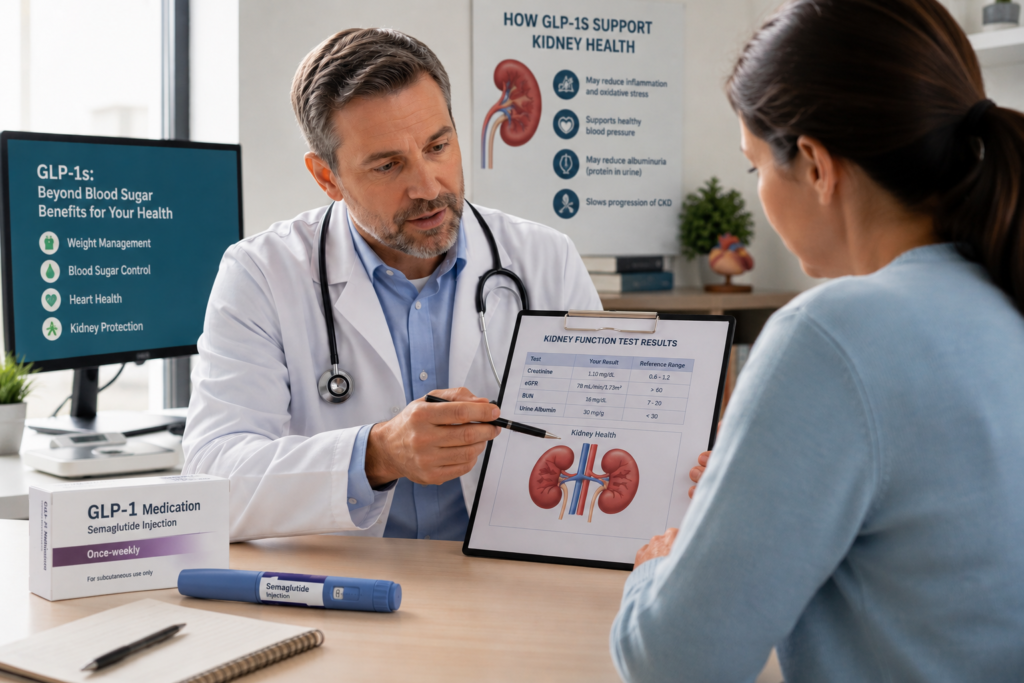
GLP-1 drugs are no longer just a blood sugar and weight-loss story. In 2025, the FDA approved Ozempic to reduce the risk of worsening kidney disease, kidney failure, and cardiovascular death in adults with type 2 diabetes and chronic kidney disease (CKD), making it the first GLP-1 with a kidney-protection indication in that specific group. Wegovy uses the same active ingredient, semaglutide, and early research suggests kidney benefits may extend beyond Ozempic’s label, but Wegovy itself does not currently carry the same FDA kidney indication. Zepbound and tirzepatide look promising for kidney protection too, but the evidence is still earlier and more indirect, with dedicated CKD trials still underway.
What We’ll Cover in This Guide
- Why GLP-1s are suddenly part of the kidney conversation
- What Ozempic is officially approved to do for CKD risk
- Whether Wegovy likely helps kidneys too
- What we know so far about Zepbound and tirzepatide
- Who might benefit most from GLP-1 kidney protection
- Important limits, risks, and misunderstandings
- My honest take on where this is heading
- Key Takeaways
- Your Next Steps
Why GLP-1s Are Suddenly Part of the Kidney Conversation
For a long time, GLP-1s were mostly discussed in two buckets: blood sugar control and weight loss. That has changed fast. Researchers now have meaningful evidence that semaglutide can do more than lower A1C or help people lose weight. It can also help slow kidney disease progression in the right patients.
That matters because chronic kidney disease is incredibly common in people with type 2 diabetes, and once kidney function starts falling, the stakes get real very quickly. Anything that helps delay dialysis, reduce kidney failure risk, or slow the decline in kidney function is a major deal.
Ozempic: The First GLP-1 With an FDA Kidney Protection Indication
This is the clearest and most important part of the story.
In January 2025, the FDA approved Ozempic to reduce the risk of worsening kidney disease, kidney failure, and death due to cardiovascular disease in adults with type 2 diabetes and chronic kidney disease. That approval was based on the FLOW trial, which found that weekly semaglutide delivered a 24% relative risk reduction in the combined outcome of kidney disease worsening, kidney failure, and cardiovascular death compared with placebo when added to standard care.
There were other important signals too:
- slower decline in kidney functiond
- reduced likelihood of major kidney events
- lower all-cause mortality in some analyses
This is why I think readers need to stop thinking of Ozempic as “just a diabetes drug that happens to help with weight.” For the right patient, it is now also part of the kidney-protection conversation.
Does Wegovy Protect the Kidneys Too?
This is where things get a little more nuanced.
Wegovy and Ozempic are both semaglutide. So from a biologic and mechanistic standpoint, it is reasonable to think Wegovy may offer similar kidney benefits, especially when weight loss, blood pressure improvement, and metabolic improvement are all part of the picture
There is also emerging research suggesting semaglutide may improve kidney markers even in people with obesity and CKD without diabetes. In the SMART trial, semaglutide was associated with a 52% reduction in urine albumin-to-creatinine ratio (UACR), which is an important marker of kidney damage. That is promising, but it is not the same thing as saying Wegovy is FDA-approved for kidney protection.
So the clean way to say this is:
- Ozempic has the official kidney indication in adults with type 2 diabetes and CKD.
- Wegovy likely shares some kidney-protective potential because it is semaglutide too, but the label and evidence base are not identical.
What About Zepbound and Tirzepatide?
This is one of the most interesting parts of the story going forward.
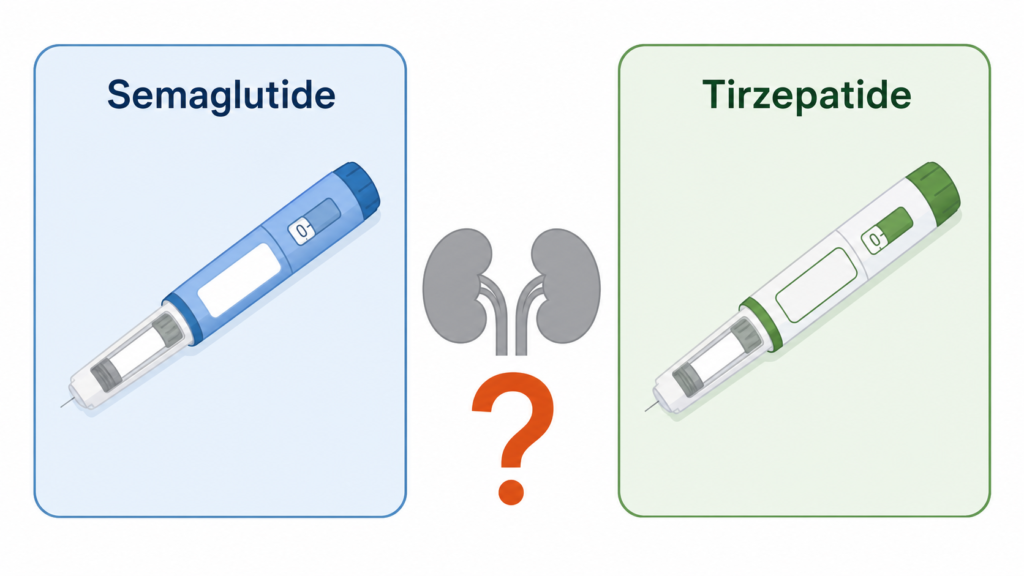
Tirzepatide, the active ingredient in Zepbound and Mounjaro, has shown encouraging kidney-related findings in earlier analyses. In a post hoc analysis from SURPASS-4, tirzepatide improved albuminuria and slowed eGFR decline, and nearly halved a composite kidney endpoint compared with insulin glargine, although much of that benefit was driven by macroalbuminuria outcomes.
That is promising, but it is still not the same level of evidence or regulatory clarity that Ozempic now has. Lilly is running the TREASURE-CKD study to better understand whether tirzepatide can help fight chronic kidney disease in people with overweight or obesity, with or without type 2 diabetes.
My read is simple:
- Ozempic is the proven kidney story today.
- Zepbound is the “very likely important soon” kidney story.
How GLP-1s May Help the Kidneys
GLP-1s probably do not help the kidneys in just one way. The benefits seem to come from several overlapping effects.
Potential pathways include:
- better blood sugar control
- weight loss, which lowers stress on the kidneys
- lower blood pressure and improved cardiometabolic health
- reduced albuminuria, which is a marker of kidney damage
- slower decline in eGFR over time
This is one reason the kidney story is so compelling. These drugs are not just hitting one lab number. They seem to be improving the overall environment that pushes CKD forward.
Who Might Benefit Most From This?
The strongest evidence right now applies to adults with:
- type 2 diabetes
- chronic kidney disease
- and often elevated cardiovascular risk as well
That means if a reader has obesity alone but no diabetes or CKD, this article should not be oversold to them. They may still have reasons to use a GLP-1 for weight loss, and that could indirectly help kidney risk long term, but the strongest current kidney-specific evidence is in the diabetes plus CKD population.pubmed.ncbi.nlm.nih+2
For those who already have:
- diabetes
- elevated urine albumin
- declining eGFR
- high blood pressure
- obesity
this is a much more relevant conversation to have with a doctor.
Important Limits and Misunderstandings
This is where a lot of bad content online goes off the rails.
GLP-1s are not a cure for CKD
Even the best semaglutide data does not mean kidney disease disappears. The real value is slowing progression, lowering the odds of major kidney outcomes, and improving the overall risk picture.
Not every GLP-1 has the same kidney evidence
It is a mistake to assume:
- Ozempic
- Wegovy
- Zepbound
- Compounded semaglutide
- Compounded tirzepatide
are all equally proven for kidney protection. They are not.
Compounded GLP-1s are a different conversation
For your affiliate site, this part matters. Readers may wonder whether compounded semaglutide from telehealth providers offers the same kidney protection story. The honest answer is that the kidney outcome data comes from branded, trial-tested semaglutide, not from telehealth compounded products. That does not automatically mean compounded semaglutide has no kidney benefit, but it does mean we should not blur those lines.pubmed.ncbi.nlm.nih+2
That is a spot where being careful actually builds more trust.
Where This Fits With Weight-Loss Care
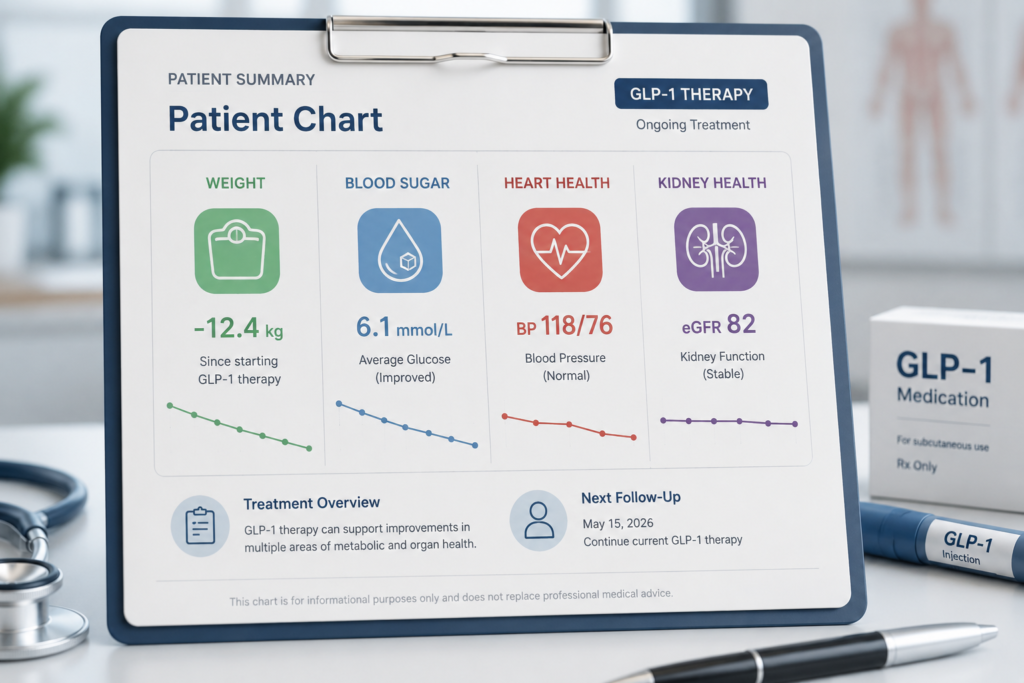
One thing I like about this topic is that it helps people see the bigger picture. GLP-1s are not just “weight-loss shots.” For the right person, they may touch several health problems at once:
- weight
- diabetes
- cardiovascular risk
- kidney decline
This is also why people with obesity plus early metabolic disease should not treat these medications like a vanity thing. In some patients, this is moving closer to organ protection than simple weight management.
My Honest Take on GLP-1s and Kidney Protection
I think this is one of the most important shifts in the whole GLP-1 category. When a weight-loss and diabetes drug starts showing meaningful kidney protection, that changes how people think about it.
If someone has type 2 diabetes and CKD, Ozempic deserves a serious conversation with their doctor because the kidney evidence is now strong and official enough to matter. If they are looking at Wegovy or Zepbound, the conversation is still worth having, but with a little more nuance. Wegovy likely benefits from the semaglutide story, while tirzepatide is still building toward that same level of kidney credibility.
My bigger takeaway is this: the GLP-1 space is maturing. It is no longer just about appetite suppression and pounds lost. It is now about what these medications may do for the heart, kidneys, and long-term disease risk too.
Key Takeaways
- Ozempic is now FDA-approved to reduce the risk of worsening kidney disease, kidney failure, and cardiovascular death in adults with type 2 diabetes and CKD.
- The approval was based on the FLOW trial, which showed a 24% relative risk reduction in major kidney and cardiovascular outcomes.
- Wegovy likely shares some kidney-protective potential because it uses semaglutide too, but it does not currently carry the same FDA kidney indication.
- Zepbound and tirzepatide have promising kidney-related data, but the evidence is still developing and dedicated CKD trials are ongoing.
- The strongest kidney-protection case right now is for people with type 2 diabetes and CKD, not for everyone broadly using GLP-1s for weight loss.
Your Next Steps
Check out these supporting articles:
- How GLP-1 Medications Work: Mechanisms, Timeline, and What to Expect if you want the bigger-picture explanation of what these drugs do in the body.
- GLP-1 Side Effects: What’s Normal, What’s Manageable, and When to Worry before starting any GLP-1 with diabetes or kidney concerns.
- Which Is Better: Semaglutide or Tirzepatide for Weight Loss? 2026 Comparison Guide if you want to compare the two main ingredients behind Ozempic, Wegovy, and Zepbound.
Final Thoughts
Kidney protection is becoming one of the most important reasons to pay attention to GLP-1s, especially semaglutide. For the right patient, this is no longer just a discussion about weight loss or blood sugar. It is a discussion about slowing organ damage and lowering the chance of much worse problems later on.
Medical Disclaimer
This article is for informational purposes only and is not medical advice. Chronic kidney disease, diabetes, and obesity are complex medical conditions that should be managed with a qualified healthcare professional. Never start, stop, or switch medications based solely on something you read online.
Sources
- FDA approval and coverage of semaglutide for kidney protection in adults with type 2 diabetes and CKD.
- FLOW trial and semaglutide kidney outcome data.
- Research and reporting on semaglutide’s kidney effects beyond the Ozempic label, including obesity and non-diabetic CKD contexts.
- Tirzepatide kidney data and ongoing CKD trial information.trials.
Affiliate Disclaimer
Affiliate disclosure: This article may contain affiliate links. If you click on a link and end up purchasing a GLP-1 program or medication, we may earn a commission at no extra cost to you. This helps support ongoing research and updates on honest GLP-1 guides.
Last updated: June 2026